
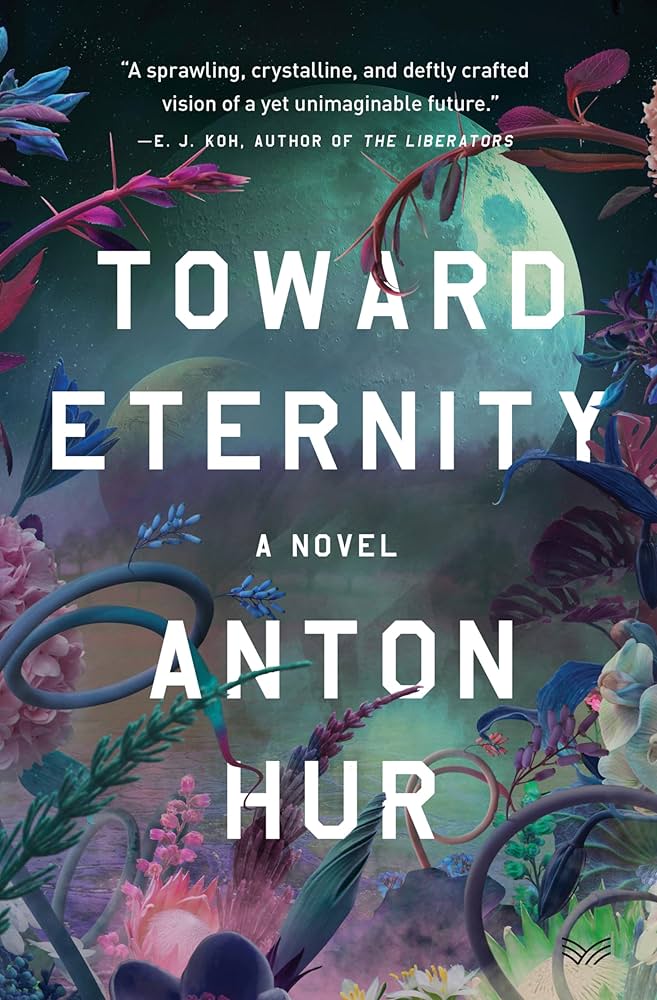
Anton Hur’s Toward Eternity (27 August 2024) beckons as a journey through a post-apocalyptic world full of mysteries and wonders. As a lifelong devotee of sci‑fi and dystopia, I’m always listening for fresh notes in a familiar symphony—new echoes of hope, ash, and human stubbornness. Hur’s novel plays those notes with poise, offering an odyssey that is both haunting and quietly life‑affirming.
Toward Eternity by Anton Hur: A post-apocalyptic odyssey
Anton Hur’s first foray into post‑apocalyptic fiction arrives with the assurance of a writer who trusts quiet moments as much as spectacle. That trust matters: in a genre crowded with noise, Toward Eternity breathes. The release date—27 August 2024—places it squarely in a moment when we crave stories that look beyond collapse toward what might still be possible.
The book’s mood is contemplative rather than cataclysmic. Hur balances sparse, crystalline prose with a keen eye for detail: the hush of abandoned spaces, the stubborn geometry of ruins, the slight tremor of a hand passing a canteen. The world is pared back, but wonder persists—not in grand miracles, but in the subtle shimmer of small survivals. As the German tagline promises, this is “eine Reise durch eine postapokalyptische Welt voller Geheimnisse und Wunder,” and Hur makes that promise feel earned.
At heart, this is a story about how we keep moving—toward each other, toward meaning, toward a future that might yet deserve the name. The odyssey structure allows for encounters that test trust and memory, teasing out ethical knots: what to preserve, what to let go, and what it costs to carry hope. Hur’s restraint lets the themes deepen by accretion; the book lingers like the afterimage of a match struck in a dark room.
Quote and 🍵 rating: Toward Eternity by Anton Hur (2024)
Rather than risk misquoting prior to wide release, here is a brief paraphrase that captures the book’s heart: in a world scoured to its bones, we keep walking not for safety but for meaning. It’s the sentiment I carried through the final pages—a quiet insistence that endurance must be tethered to purpose, not merely fear.
My rating: 🍵🍵🍵🍵 (4/5). The prose is luminous without preciousness, and the atmosphere is rich with lived‑in texture. If the pacing occasionally drifts into meditative opacity, it’s a deliberate choice that suits the book’s reflective character, even if it may test impatient readers.
Who will love this? Readers who relish contemplative, humane dystopias—stories that prioritise interiority over pyrotechnics and let mystery remain partly unspoken. Brew a strong cup, let the kettle sing, and read slowly. Toward Eternity rewards attentiveness with glints of wonder amid the rubble.
Toward Eternity left me thoughtful and strangely hopeful—the kind of hope that doesn’t deny ruin but threads through it, stitch by careful stitch. If post‑apocalyptic fiction is a mirror, Hur tilts it toward the light, catching the angles where compassion survives. I’ll be thinking about this journey—and the quiet courage it asks of us—for a long time.