

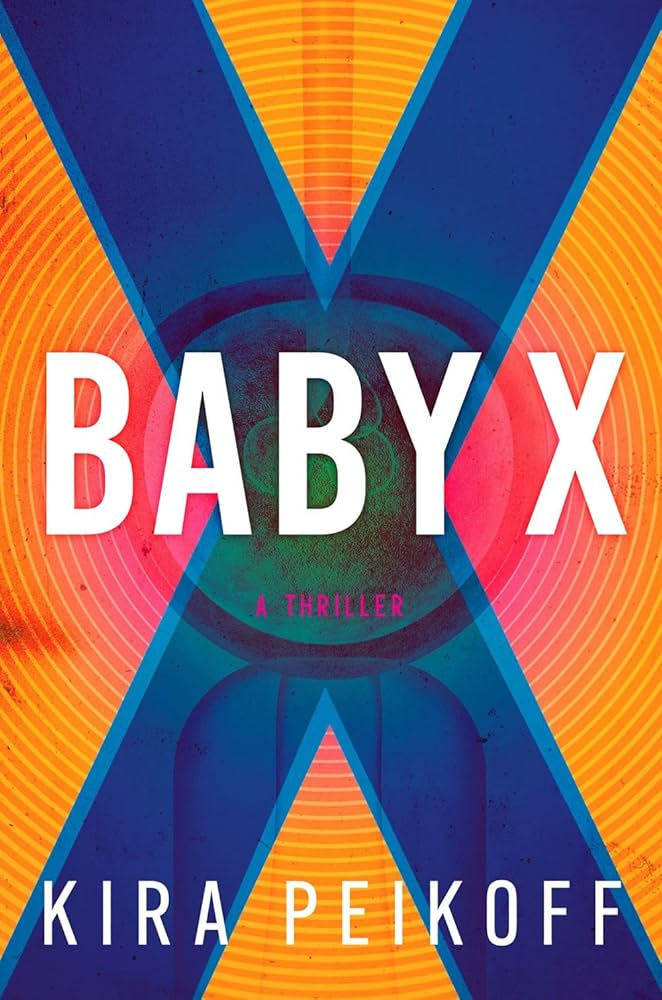
As a dyed-in-the-wool admirer of speculative fiction and dystopias, I’m always on the lookout for novels that interrogate where science might take us next—and what it could cost. Kira Peikoff’s Baby X (2024), released on 21 May 2024, squarely fits that bill, promising a tense journey through cutting‑edge research and the moral minefields it sets off. This review offers my thoughts, a rating in teacups, and a spoiler‑free paraphrased line that stuck with me long after I turned the final page.
Baby X by Kira Peikoff (2024): Ethics of Future Science
Peikoff’s Baby X arrives at a timely moment, when breakthroughs in reproductive technology and genetics are leaping ahead of public understanding and regulation. The novel’s premise—future-facing scientific experiments colliding with human hopes and fears—echoes the succinct German tagline: “Wissenschaftliche Experimente und ihre ethischen Grenzen in der Zukunft.” Published on 21 May 2024, it sits squarely in the near‑future sci‑fi tradition, where plausibility amplifies tension.
What impressed me most is how the book traces the fault lines of consent, personhood, and responsibility without preaching. It probes who gets to decide when the body becomes a battleground for innovation: patients, parents, researchers, or investors—and on whose timetable. Peikoff layers in questions around data privacy, biotech oversight, and the seductive certainty of algorithms, turning ethical abstractions into visceral stakes.
Stylistically, the prose shifts deftly from clinical precision to intimate urgency, mirroring the thematic swing between lab and living room. The world-building is grounded—familiar enough to feel inevitable, distinct enough to feel alarming. It recalls the best of speculative bioethics fiction while maintaining its own punchy cadence and clear-eyed compassion for characters caught between miracle and misstep.
A dystopian sci-fi review with 🍵🍵🍵🍵 and a choice quote
My verdict: a strong four teacups out of five (🍵🍵🍵🍵). The novel’s pace is propulsive, its moral inquiry persistent, and its scenarios chillingly credible. I shaved off one teacup only because a handful of explanatory beats feel a touch on‑the‑nose; even so, the narrative seldom loosens its grip, and the ideas linger.
Readers who relish dystopias rooted in real research will find plenty to chew over here, whether in a book club or a solo late‑night read. Baby X smartly navigates the messy overlap of private longing and public risk, asking how far we’re willing to go for an imagined better future—and who bears the cost when that future arrives unevenly. It’s thoughtful, accessible, and unafraid to prod at uncomfortable truths.
Choice quote (paraphrased, spoiler‑free): “We can engineer a genome, but not its consequences.” It’s a line that encapsulates the novel’s heart: the difference between what our tools can accomplish and what our ethics can steward. If your shelves already host cautionary classics about science outpacing society, make room for this one.
Baby X is a tense, humane thought experiment about tomorrow’s breakthroughs and today’s boundaries—an excellent pick for readers who like their sci‑fi grounded and their dystopias ethically chewy. Brew a pot, settle in, and prepare to question the thin lines between innovation, intention, and responsibility. If you’ve read it, I’d love to hear your take—teacups at the ready.