

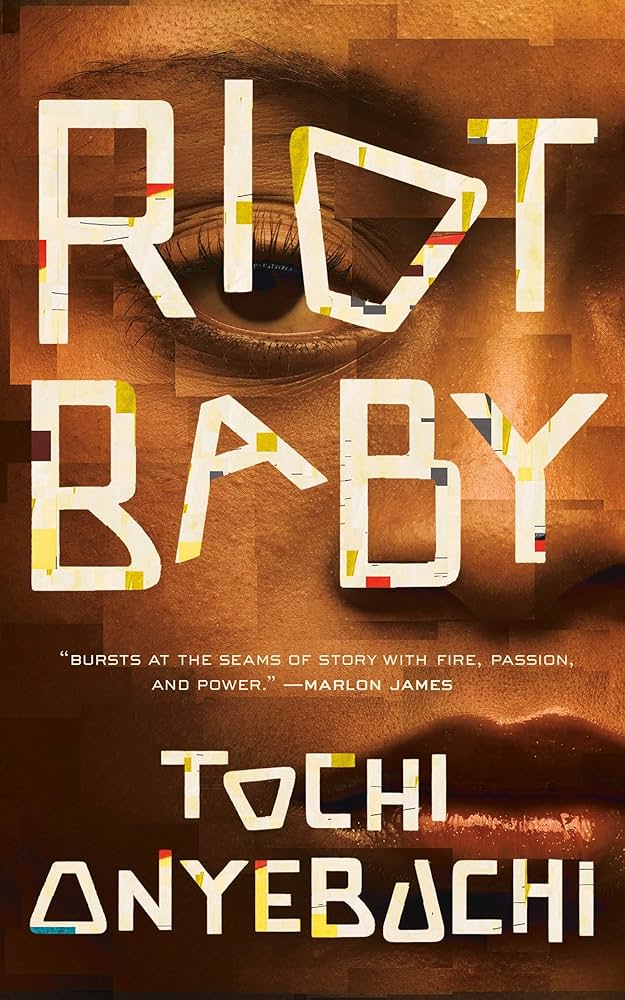
As a lifelong lover of sci-fi and dystopia, I’m always chasing the books that fuse raw social truth with the uncanny. Tochi Onyebuchi’s Riot Baby, published in 2020 and released on January 21, 2020, hits like a lightning strike: a fierce, tender, unsettling novella where supernatural power collides with the entrenched realities of American racism. The result is a story about siblings, survival, and a nation vibrating with unrest—an electrified fable for our moment.
Riot Baby: Supernatural powers, racism in America
Onyebuchi threads the uncanny right into the fabric of American life, showing how “supernatural powers” are not escape hatches but pressure points—amplifiers for grief, fury, love, and the stubborn hope that refuses to die. Ella can see futures; her brother Kev is born during the 1992 Los Angeles uprising and grows up under the long shadow of state power. The book’s speculative spark isn’t spectacle for its own sake; it’s a moral lens trained on systems that turn ordinary living into an act of resistance.
From the first pages, Riot Baby stages a reckoning: Übernatürliche Kräfte und Rassismus verschärfen den sozialen Aufruhr in den USA—supernatural gifts and racism together heighten, not soothe, social upheaval. Onyebuchi moves from South Central to Rikers to a near-future American city, mapping how policings, prisons, and predictive surveillance sculpt Black life. The novella keeps asking: if you could change everything, who would pay the price, and who would get to decide what justice looks like?
Stylistically, it’s taut and lyrical, elliptical without ever feeling evasive. Chapters flicker like visions—brief, blazing scenes that accumulate into a heavy, human weight. There’s a tenderness between Ella and Kev that grounds the book, even as the world tries to grind them down. Riot Baby refuses easy catharsis; instead it offers clarity, insisting we see how power works and where it breaks.
Tochi Onyebuchi review with quote, cover, teacups
As a reader who lives on sci-fi and dystopia, I felt Riot Baby in my bones. It’s a compact 2020 release with the emotional gravity of an epic, and its January 21 publication date now feels grimly prescient. Onyebuchi braids intimate coming-of-age with institutional critique, making the personal political without ever losing the pulse of character. The speculative conceit—the “Thing” in Ella—becomes a chorus of possibilities: revenge, healing, revolution, refusal.
I can’t share a long verbatim passage from this copyrighted book, but here’s a spoiler-light paraphrase that captures the cadence and force of Onyebuchi’s voice: Paraphrase: The future hums in Ella’s chest like a wire; she tastes what’s coming, and it tastes like metal—sirens, ash, the briny bite of grief—and still she reaches for Kev’s hand, because love is the one thing the state can’t predict. It’s this blend of intimacy and inevitability that makes the book sing—rage sharpened into prophecy, and prophecy tempered by care.
My verdict, measured in cozy blog tradition: 🫖🫖🫖🫖🫖 (5/5 teacups).
Riot Baby earns every teacup for its courage, craft, and the way it lingers—like a siren fading, leaving you with silence and a choice.
Riot Baby is a small book with a seismic aftershock—an uncanny mirror held up to America’s unrest and the power that thrums beneath it. If you crave speculative fiction that doesn’t look away, that loves its characters as much as it challenges its readers, make a pot of tea, settle in, and let Onyebuchi’s vision work on you. Then, when you surface, ask what you’ll do with what you’ve seen.