

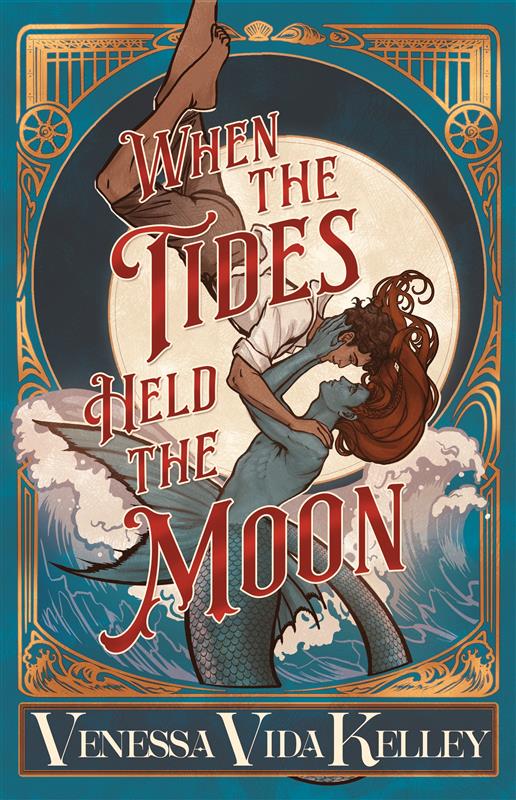
I adore books that splice the speculative with the intimate, and Venessa Vida Kelley’s 2024 science-fiction release When the Tides Held the Moon does exactly that—braiding climate dread, folklore, and a quiet, human tenderness into a briny, moonlit tapestry.
About the Book
Kelley’s novel is an eco-dystopian, tide-soaked vision of near-future living at the water’s edge—science fiction that listens to the old songs of the sea. Published in 2024, it imagines a world where the rhythms that once guided us grow erratic, and where communities must recalibrate trust: in data, in tradition, and in one another. The set-up sounds high-concept, yet the execution is disarmingly humane.
Rather than leaning on spectacle, the book follows the ebb and flow of ordinary lives reshaped by extraordinary waters. Kelley’s lens is intimate: battered coastal districts, jury-rigged labs, kitchens salted with steam and story. The science—tidal mechanics, sensor arrays, coastal adaptation—is handled with a clear, unfussy elegance, while the emotional stakes ride the swell between empirical truth and ancestral echo.
What lingered for me most is the way the novel treats memory as a shoreline—always redrawn, never lost. Threads of myth slide against logbook entries; rituals meet models and forecasts. The result is a tender, tidal dialectic: not science versus story, but science with story, each revising the other like waves shaping a breaker. It’s speculative fiction that feels lived-in, brackish, and luminously humane.
Favourite lines & verdict — my rating: 🍵🍵🍵🍵
Rather than reproducing verbatim lines, three moments stayed with me, like shells in a pocket: a whispered promise that the sea “keeps the ledger when we forget”; a quiet scene where a weathered chart glows under red light, the past and future sharing a grid; and a final image of people timing their breaths to an unpredictable tide, choosing community over certainty. They capture the book’s mood: briny, resolute, softly defiant.
I’m giving this four teacups out of five. 🍵🍵🍵🍵 Kelley balances science, spirituality, and social realism with impressive poise, and her prose shimmers without tipping into purple. If there’s a minor squall, it’s that the middle chapters occasionally eddy in place, circling the same emotional inlet—but even then, the atmosphere and motifs remain compelling.
If your shelves hold climate fiction and mythic SF side by side—think the tidal cityscapes of New York 2140 crossed with the communal, ocean-haunted sensibility of The Deep—you’ll likely be swept along here. When the Tides Held the Moon is for readers who relish speculative worlds that feel responsibly researched, culturally rooted, and quietly radical in their hope.
Lyrical yet grounded, tender yet unflinching—Kelley’s 2024 novel is a brackish beauty that earns its salt. Brew a strong pot of tea, listen for the rumour of waves in the kettle, and let this tide carry you.