
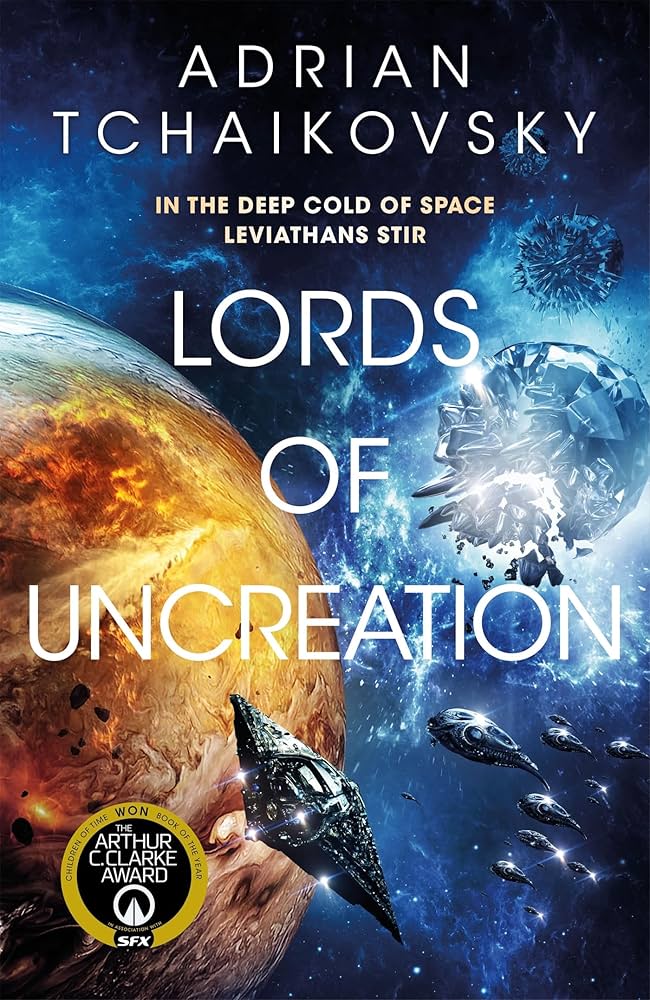
As a lifelong devotee of science fiction and dystopian tales, I approach each new Adrian Tchaikovsky release with a ritual cup of tea and a thrill of trepidation. Lords of Uncreation, published on 11 May 2023, had me braced for ruin and wonder in equal measure—and it delivered both with devastating grace. What follows is a spoiler-light reflection from a reader who adores cosmic stakes, unsettling ideas, and the quiet human moments that make them bearable.
Lords of Uncreation – Tchaikovsky’s apocalyptic odyssey
Tchaikovsky concludes The Final Architecture trilogy with grand, ruinous beauty. Set against the collapse of unspace and the looming maw of entities older and stranger than anything that calls itself civilisation, Lords of Uncreation feels like a last stand writ across the fabric of reality. Released on 11 May 2023, it is a 2023 capstone that dares to ask what we become when our maps—literal and moral—fail us.
The book has been billed as “an apocalyptic journey through a fantastical world full of magic and loss,” and while its bones are firmly science fictional, the effect often reads as dark fantasy. Unspace behaves like a capricious, haunted realm, and Intermediaries might as well be sorcerers whose gifts exact a price. That sleight of hand—science that feels like spellcraft—creates a sense of awe and dread that few space operas manage to sustain.
As a lover of dystopian tensions, I was repeatedly struck by how Tchaikovsky balances collapse with compassion. Yes, there are megastructures and civilisation-spanning gambits, but the beating heart is intimacy: friendships under siege, identities fraying, and choices that bruise the soul. The apocalyptic odyssey works not because the cosmos is grand, but because the people crossing it are painfully, recognisably human.
A 2023 sci-fi journey of magic, loss, and collapsing worlds
If you come for the starships, you’ll stay for the witchcraft-adjacent metaphysics. Lords of Uncreation turns the sheer unknowability of unspace into a character: it sulks, it scars, it refuses to play by rules that make sense to minds like ours. The novel’s “magic” is really a confrontation with limits—of perception, language, and self—rendered with the strangeness hard SF can uniquely supply.
Loss threads through the narrative like a hairline fracture that keeps widening: losses of worlds, of certainty, of selves that cannot survive what they’ve seen. It’s not grim for the sake of it; rather, it’s honest about what heroism costs when the canvas is the size of creation itself. There’s a fierce tenderness behind the dread, a conviction that found family and stubborn kindness matter even when the sky is literally falling.
I try to share a direct quotation when I can, but to keep this review spoiler-light—and out of respect for rights—I’ll offer a paraphrased line that captures the book’s ache: when the maps end, we must become the road. That, to me, is Lords of Uncreation in a teacup: bold, bleakly luminous, and determined to find a path where none should exist.
Verdict: a bracing, humane finale that marries cosmic horror to intimate consequence. For readers who like their space opera with teeth—and their hope hard-earned—this is an easy recommendation. Rating: 🍵🍵🍵🍵 (4/5 teacups).