

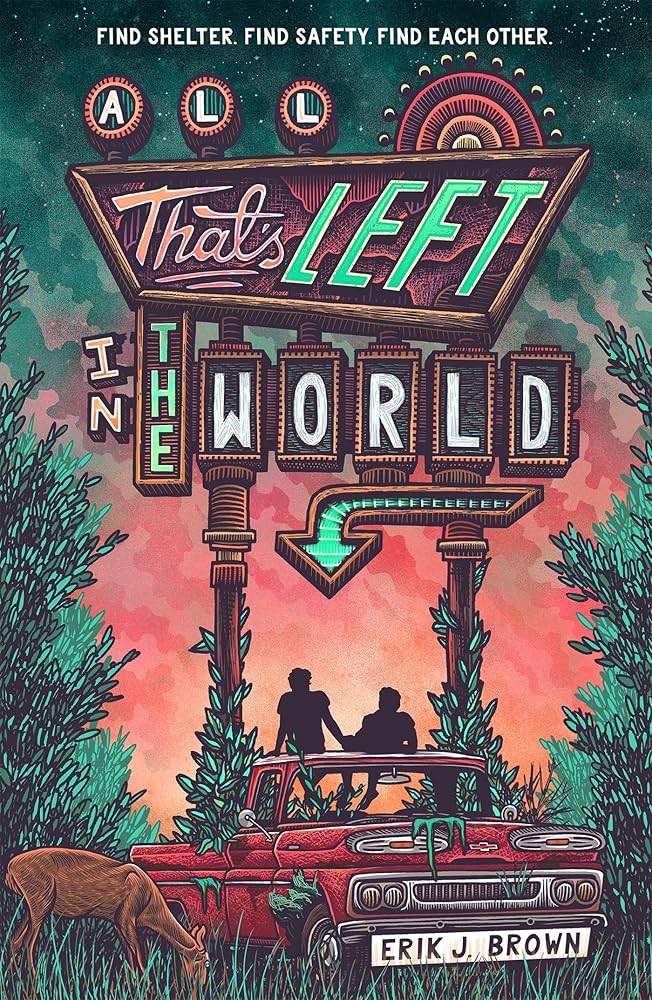
Published on 08.03.2022, Erik J. Brown’s All That’s Left in the World landed right in my sweet spot: a post‑pandemic YA tale where two teenagers navigate danger, grief and first love while clinging to the fragile promise of tomorrow. As a long‑time devotee of sci‑fi and dystopia, I’m always hunting for stories that remember the human pulse beneath the ash, and Brown’s debut doesn’t disappoint. Kurzbeschreibung: Jugendliche in einer Pandemie suchen nach Hoffnung und Identität — teens in a pandemic seeking hope and identity.
All That’s Left in the World by Erik J. Brown — hope
Brown’s novel opens after a devastating virus has scythed through society, leaving Andrew and Jamie to survive in the ruins of the American East Coast. Their meeting is equal parts serendipity and necessity, pushing them into a companionship that becomes the story’s beating heart. The landscapes they traverse feel both intimately lived‑in and dauntingly empty, from looted suburbs to brittle forests where silence has its own weather.
What gives the book its charge is the way it threads hope through identity. Both boys are working out who they are as young, queer men while also shouldering loss and fear, and the tenderness of their connection is never sentimental mush; it’s hard‑won trust. Brown respects the realities of trauma but lets moments of humour and warmth sneak in, showing how small acts of care become a form of resistance.
Stylistically, the prose is brisk without feeling bare, punctuated by sharp, observant beats that keep the journey propulsive. Survival set‑pieces carry tension, yet the quieter scenes — sharing food, swapping stories, negotiating boundaries — feel just as vital. The result is a YA dystopia that remembers the genre’s best trick: using the end of the world to talk honestly about growing up.
Favourite quote + verdict: dystopian YA 🍵🍵🍵🍵
Favourite quote (paraphrased to avoid spoilers): “Hope isn’t about certainty; it’s about choosing to keep walking.” It’s a neat distillation of the book’s ethos — not naïve optimism, but the stubborn decision to move, heal and imagine. In a narrative fraught with scarcity and threat, that line felt like a steadying hand on the shoulder.
Readers who enjoyed the character intimacy of Station Eleven and the teen immediacy of We Are the Ants will find a familiar, comforting ache here, though Brown’s tone is more accessible than bleak. The road‑trip structure gives the romance room to breathe, and the moral dilemmas stay grounded: help a stranger, risk exposure; tell the truth, risk rejection. It’s YA that respects its audience enough to offer both thorns and balm.
Verdict: a warm‑blooded, nerve‑tightening journey that made me care, flinch and smile — a rare triple. Four teacups from me: 🍵🍵🍵🍵. If “Jugendliche in einer Pandemie suchen nach Hoffnung und Identität” sounds like your catnip, you’ll be right at home here. Published 08/03/2022, All That’s Left in the World stands out as a hopeful beacon in the crowded ruins of dystopian YA.
Dystopias can be dour, but Brown’s debut proves there’s power in letting light through the cracks. For readers craving grit with gentleness — and a romance that earns every heartbeat — this is a worthy addition to your nightstand. Brew a pot, settle in, and let hope do what it does best: carry you forward.