
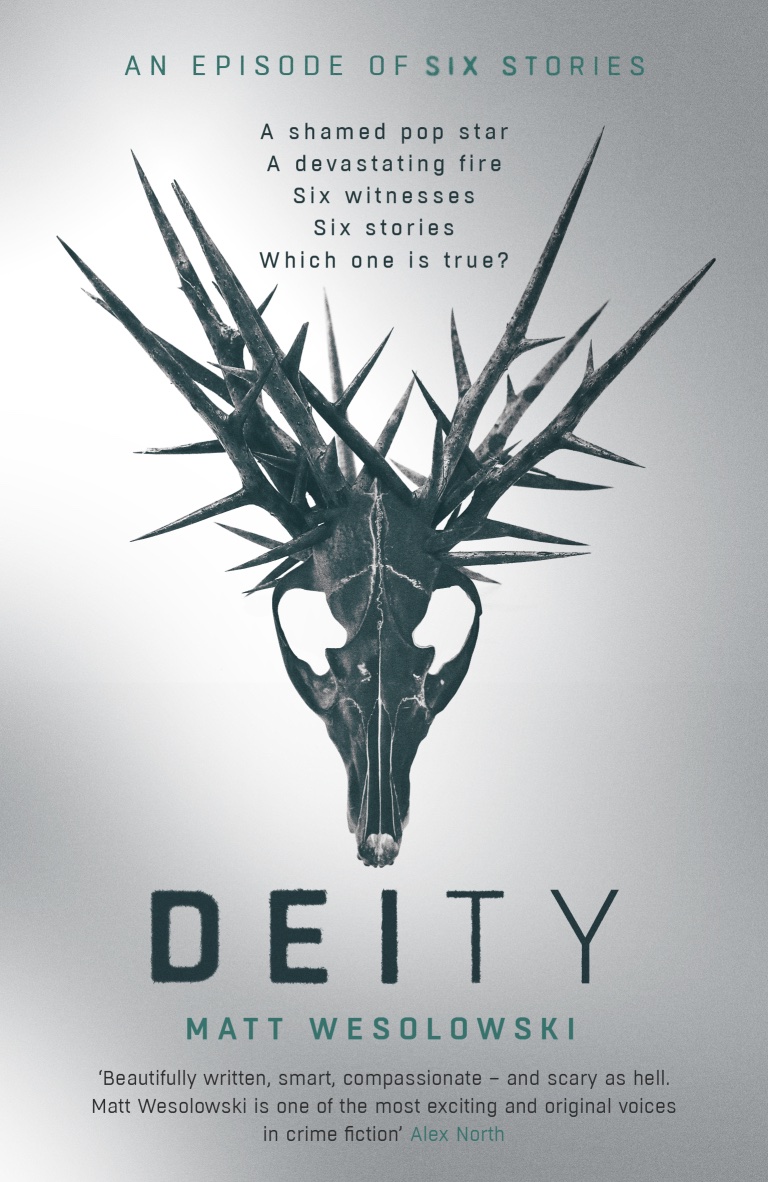
As a lifelong devourer of speculative fiction—particularly where sci‑fi shades into the dystopian—I’m always hunting for novels that tangle modern anxieties with older, stranger currents. Matt Wesolowski’s Deity (Six Stories #5), published on 18 February 2021, is precisely that kind of serpentine read: a true‑crime façade shot through with folk terror, whispered myths, and the uneasy sense that something ancient is awake beneath our 24/7 culture. In the spirit of the series’ layered storytelling, I’m leaning into the theme promised by the topic—ancient powers and balance—and how Deity toys with both.
Deity by Matt Wesolowski – ancient powers, balance
Wesolowski frames the tale through Scott King’s podcaster lens, his trademark six‑interview structure peeling back the life and death of a mega‑famous musician whose legend only fattens in the shadows. In the wake of his demise, accusations curdle online and off, while the forested estate he kept—lonely, wind‑harried, and full of echoes—breathes with stories older than any chart‑topper. That German‑leaning logline, “a man discovers ancient powers and must keep the world’s balance,” resonates here, not as fantasy heroics, but as a moral and cultural tightrope: one man’s narrative threatening to tip the scales for everyone orbiting him.
What makes Deity so gripping is the balance it strikes between testimony and myth. Each voice King records feels convincing and contradictory, pushing the reader to weigh hearsay against folklore, trauma against devotion, celebrity against the cold hush of the trees. Wesolowski renders the internet’s roar as another kind of eldritch chorus—algorithmic and relentless—so that even the “rational” side of the tale hums with the supernatural logic of a curse. The result is a study in equilibrium: justice versus witch‑hunt, compassion versus credulity, fact versus the stories we need.
And yes, the “ancient powers” here are not fireballs and runes, but the old, patient forces of land, fear, and collective memory. Deity makes the case that such powers never vanished; they simply put on new masks: stan culture, viral narratives, brand management. As King tries to keep his series balanced, we sense how fragile that balance is in the wider world—how quickly a society can slip when its myths, new and old, begin to steer rather than warn.
Rating: 🍵🍵🍵🍵 A dystopian tale of old gods stirring
Four teacups from me. Deity is atmospheric, unsettling, and slyly timely, bridging folk horror with a dystopian mood where institutions feel brittle and discourse feels cursed. While it’s more true‑crime‑horror than hard sci‑fi, the dystopian current is undeniable: a culture ruled by attention, where reputations rise like idols and fall like sacrifices, and where the land itself seems to watch. Wesolowski threads it all through a brisk, propulsive mystery that keeps your moral compass spinning.
The prose is lean but lyrical, with a keen ear for the cadences of testimony and online fervour. 2021 feels important here: that liminal moment when isolation made our screens into altars and our forests into haunted rooms again. The sense of place is superb—wet bark, bruised skies, the hush that makes you turn and check the path behind you—balancing modern noise with ancient quiet in a way that lingers long after the final episode ends.
A favourite note (paraphrased, to dodge spoilers): “Some myths keep us safe by reminding us where not to tread.” That’s the charm and chill of Deity in one line: story as warning flare, as boundary line, as balance beam. If you’ve followed Six Stories, this fifth instalment deepens the series’ cosmology; if you’re new, it stands alone, but you’ll likely want to binge the rest with a hot brew close by.
Deity (2021) shows Wesolowski at his most assured: a mosaic of voices, a tangle of ancient whispers, and a world straining to hold its balance as new gods are minted and old ones wake. For fans of dystopia‑adjacent fiction, folk horror, and morally knotty mysteries, it’s a heady pour—dark, aromatic, and a little dangerous. I’m leaving it at 🍵🍵🍵🍵, and I’ll be thinking about those woods—and our modern altars—for a long while yet.