

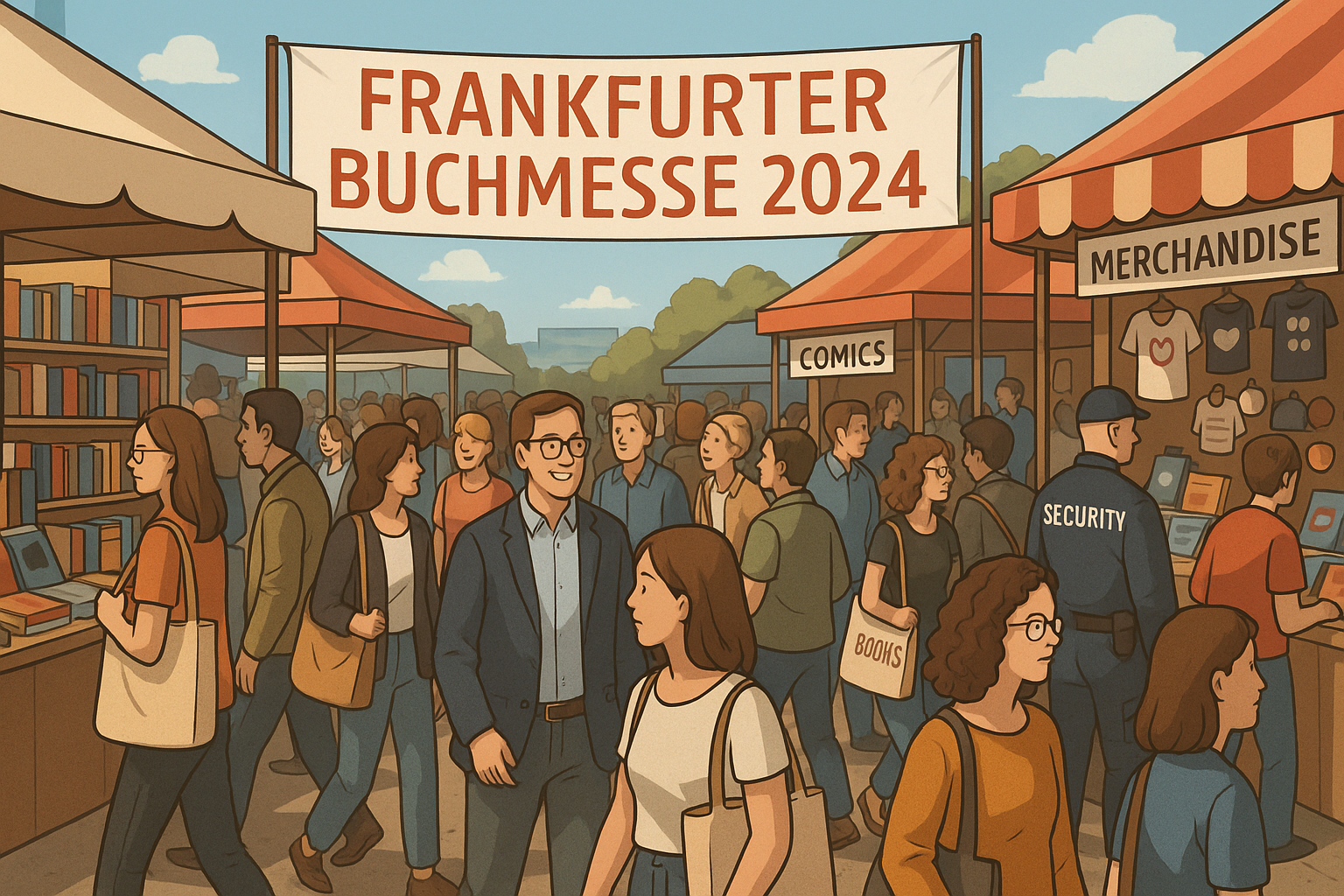
I went to Frankfurt Book Fair 2024 with two minds in one backpack: the wide-eyed reader who still gets giddy at the smell of new paper, and the security nerd who can’t not notice a rogue Wi‑Fi name or a badge scanner left unlocked. This post is part general blog musings, part security diary, and part love letter to the sprawling organism that is the Frankfurter Buchmesse—yes, my notes folder is literally labeled “frankfurther buchmesse 2024 – the good an the bad,” typos and all, because that’s how real life looks when you’re moving fast and breathing ink.
Frankfurt Book Fair 2024: The Good and the Bad
The good hits you first: the scale, the languages, the sense that every aisle contains a doorway to a world someone labored to name and frame. You hear contracts being born in low voices, meet translators who rescue jokes from one tongue and settle them safely into another, and watch readers line up for authors who once wrote in a bedroom at midnight, unsure anyone would care. The fair is a reminder that the global book ecosystem is both delicate and wildly resilient.
Another good: serendipity. We talk about discovery platforms like they’re apps, but at Frankfurt, discovery is literal—turn a corner and find a micro-press chiseled from idealism, a comic imprint with four titles and a future, a university press with a monograph that reorders your weekend. The hype cycles of the internet flatten taste; a day at the fair inflates it again, then re-folds it with human hands.
There’s also the industry-machine good: rights trading humming like a power plant. When it works, it creates paydays for authors, lifelines for independents, and bridges for readers in regions where a title might otherwise never travel. You realize how much reading depends on these invisible agreements—and how much dignity there is in the quiet competence of people who make them.
The bad is not a villain, just friction. The bigness that dazzles also overwhelms: sensory overload, budgets that make small presses wince, queues that eat the time that could have been a conversation. There’s the subtle bad of algorithmic buzz sneaking into booth design and panel curation—loud titles hogging oxygen while careful books whisper from the edges. And there’s the environmental math of it all, which the fair tries to address but which still lingers like jet lag.
Inside the Halls: Hype, Deals, and Security Gaps
Hype is the fair’s weather system. Pop-up stages pulse with BookTok energy, AR backdrops summon selfie lines, and signings snake around structural pillars like tame lightning. It’s infectious in a good way—visibility matters, and if a thousand phones are what it takes to carry a poem farther, so be it. But hype also drafts uncertainty: the sense that a book’s worth is tallied in decibels rather than rereads.
Deals, meanwhile, look quiet from the outside. Inside the rights center, speed and patience coexist: coffee, shorthand, eyebrows doing half the talking. The art is not just spotting a hit; it’s mapping a book to a market, pairing an editor with a sensibility, and agreeing on timing. You hear phrases like “world minus North America” and know that somewhere an author’s calendar just changed.
Security at a fair like this is mostly about flow and trust: badges scanned, bags checked, chokepoints managed. Staff are visible and trained, and the emergency signage is solid. Yet, as with any massive event, edges fray under peak load—side doors that depend more on social norms than hardware, lanyards swapped as a favor, and the occasional unattended backpack adopting a small patch of carpet like it pays rent.
Cyber-physical gaps ride in on convenience. Public Wi‑Fi with lookalike SSIDs, QR codes proliferating faster than consent forms, lead-retrieval tablets caching data behind flimsy PINs, and USB giveaways no one should ever plug into anything they love. None of this is unique to Frankfurt; it’s what happens wherever business meets bandwidth. The fix isn’t paranoia but hygiene: better defaults, clearer consent, and a culture where “no thanks” is heard as professionalism, not paranoia.
Me in the Mix: Notes from a Security-Minded Fan
I arrived early with a plan that fit on a sticky note: shoes that forgive, water I could refill, and a map cached offline. I carried a small threat model too: a travel SIM, a VPN, a burner email for lead captures, and a rule about paper over plastic for notes. It sounds joyless when typed, but in practice it’s freeing—less time worrying about my data, more time losing it (joyfully) to conversations.
I skipped unknown chargers, declined USB sticks politely, and photographed QR posters to open later, away from the crowd and the adrenaline that makes you click first and think after. When a booth asked to scan my badge, I asked what they’d store and for how long; most had honest answers, a few had a raised eyebrow, and one gave me a chocolate for asking—a Security Snack, which I hereby propose as policy.
Between precautions, I did the real work of being a fan. I stumbled onto a debut that felt like a letter written to my past self, traded recommendations with a librarian who has the best laugh in Frankfurt, and stood in a line that became an impromptu seminar on cover design trends. I chatted with a rights agent about midlist salvation strategies and with a typesetter about widows, orphans, and the moral weight of hyphens. My camera roll is 30% spines, 30% signage, 30% coffee, and 10% mistakes I’ll keep anyway.
Back in the hotel, I tagged notes under “frankfurther buchmesse 2024 – the good an the bad,” leaving the typo as a souvenir of speed. The good: community, craft, the stubborn optimism of people who believe that ideas deserve better than a scroll-by. The bad: noise, fatigue, and the little cuts where security gets sacrificed to momentum. And me: an ordinary reader with a few extra layers, trying to keep the seams tidy without losing the magic in the cloth.
Frankfurt 2024 reminded me that loving books is an embodied practice—feet, voice, eyes, boundaries. The fair is vast and imperfect, a cathedral built by many hands and kept warm by constant use. If you go next year, take your curiosity and your consent settings, your patience and your power bank, your questions and your comfortable shoes. Make space for small presses, ask what happens to your data, and leave room in your bag for one book you didn’t plan to buy but now can’t imagine leaving behind.