

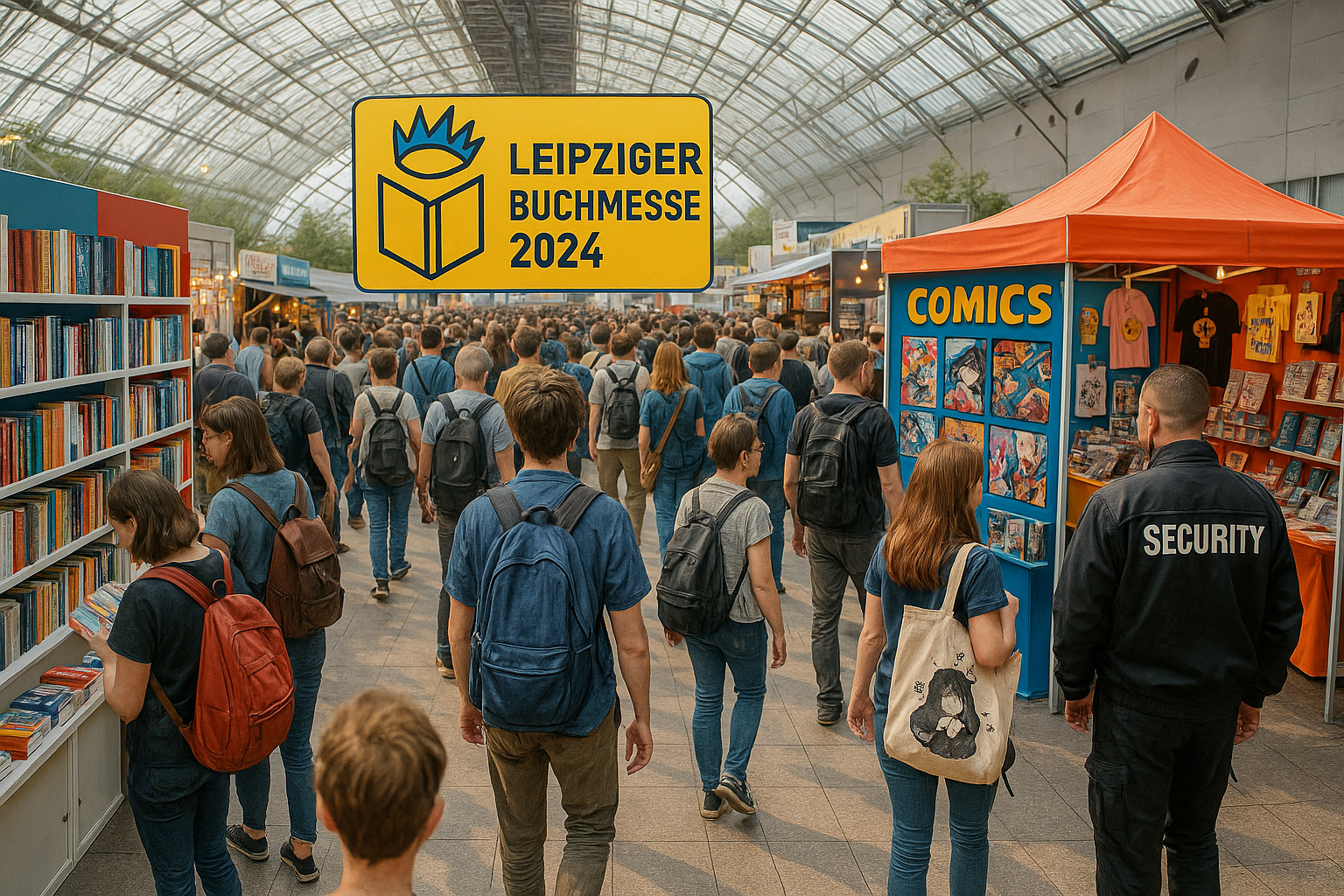
I went to the Leipziger Buchmesse 2024 with a tote bag full of optimism and a phone full of schedules, and I came home with a head full of thoughts about crowds, culture, and how we keep ourselves and each other safe. This post is both a recap and a reflection: the good, the bad, security, and me. It’s also a note to my regular readers about how this blog fits into the rhythm of book-fair season and why Leipzig still matters to the way we talk about books.
On the Blog: Leipzig Book Fair 2024 in Context
This blog has always been a place where reading meets logistics—what it takes to find the stories that move us, and how the spaces that promise connection actually deliver it. Book fairs make for perfect case studies because they compress the entire ecosystem—publishers, translators, authors, readers—into a few intense days. Leipzig is one of the living rooms of this world: public-spirited, conversation-first, and happy to let curiosity spill out into the city.
Leipzig’s springtime fair has a different pulse than other industry gatherings. It’s open-facing, a place where readers and writers share the same hallway coffee and the same tired feet. The programming leans toward dialogue: readings, debates, translation talks, and a wide array of niche subjects finding their moment under bright lights. The result is less about announcements and more about encounters.
For 2024, the context felt like consolidation after years of disruption and experimentation. Some publishers are back on familiar ground, some are still testing formats, and readers—ever adaptable—just want to be close to the stories again. That blend suited this blog’s lens: less scoops, more texture; less “what’s hot,” more “what it felt like to be there.”
My plan going in was simple: follow the conversations, map the crowd patterns, and keep an eye on security culture without turning into a hall monitor. I set three rules for myself—one big room, one small room, one wandering hour per day—and packed accordingly: water, snack, portable charger, and a humility that says it’s okay to ditch a schedule when serendipity knocks.
Leipzig 2024: The Good and the Bad of the Fair
Let’s start with the good because there was a lot of it. The energy was generous—authors unspooling ideas without rushing, indie presses making the case for the slow burn, and readers asking questions that cut to the marrow. The Manga-Comic-Con vibe brought color and joy, a reminder that book culture is many cultures braided together. The best moments felt like eavesdropping on a citywide conversation that welcomed you to pull up a chair.
Programming-wise, breadth was the headline. From translation craft to climate narratives, disability in literature to small-language revivals, the thematic range made it easy to build your own festival-inside-the-fair. I stumbled into a panel on the ethics of autofiction that was standing room only and left with three new authors on my list. Leipzig is particularly good at these “unexpected syllabus” moments.
Now for the bad, because “leipziger buchmesse 2024 – the good an the bad” is not just a catchy post title. Crowds were a real factor. Lines formed early for marquee events, and acoustics in certain halls turned thoughtful panels into sonic soup. Some rooms were clearly oversized for their audiences, others undersized, which meant walking marathons for latecomers and occasional safety-driven refusals at the door. Success has a way of making logistics sweat.
A few practical gripes: signage could be clearer at choke points, the air can get stale by mid-afternoon, and food queues test the patience of even the saintliest reader. Accessibility remains uneven—progress, yes, but still too reliant on individual staff heroics rather than seamless design. None of this cancels the magic; it just taxes it. The fair works best when its infrastructure matches its ambition.
Security and Me: Navigating Crowds and Risks
Security was present this year in a way that felt steady rather than theatrical: bag checks where they made sense, visible staff at bottlenecks, and quick interventions when rooms reached capacity. It’s a delicate balance—enough structure to keep things safe, not so much that curiosity gets policed. Your mileage may vary, but from my vantage point it mostly landed on the right side of calm.
My personal threat model at a book fair is boring by design: pickpockets, lost items, dehydration, and the occasional crush in a narrow corridor. I wore a small crossbody inside the jacket, kept the backpack minimal, and used a slim wallet with just the essentials. Phone on lanyard, battery topped up, and a paper fallback of key schedules because Murphy’s Law loves a crowded hall.
Digital safety mattered too. I kept tickets and passes accessible but locked behind the phone’s biometrics, avoided random public Wi‑Fi, and turned off Bluetooth discoverability. I also dropped a little tracker in the bag—not a drama move, just a nudge toward peace of mind. If you’re traveling with kids or in a group, pick a rendezvous spot outside the loudest halls; when the network buckles, old-school meet-up plans beat a thousand frantic messages.
Emotional security deserves a mention. Big events can fray the edges—noise, decision fatigue, the low-grade stress of being jostled. My tactic: one quiet reset per day, preferably near natural light; a hard “no” to overscheduling; and permission to leave a session that isn’t landing. Safety isn’t only about gates and guards; it’s also about boundaries we keep for ourselves.
Leipzig 2024 reminded me why this fair is a touchstone: it’s big enough to hold multitudes and intimate enough to make those multitudes feel personal. The good was generous, the bad was manageable, and the security piece—both institutional and personal—mostly did its job so the stories could do theirs. If you went, I’d love to hear your version of the good and the bad. If you didn’t, consider this your nudge to plan lightly, pack wisely, and leave room for the moments you can’t schedule but won’t forget.