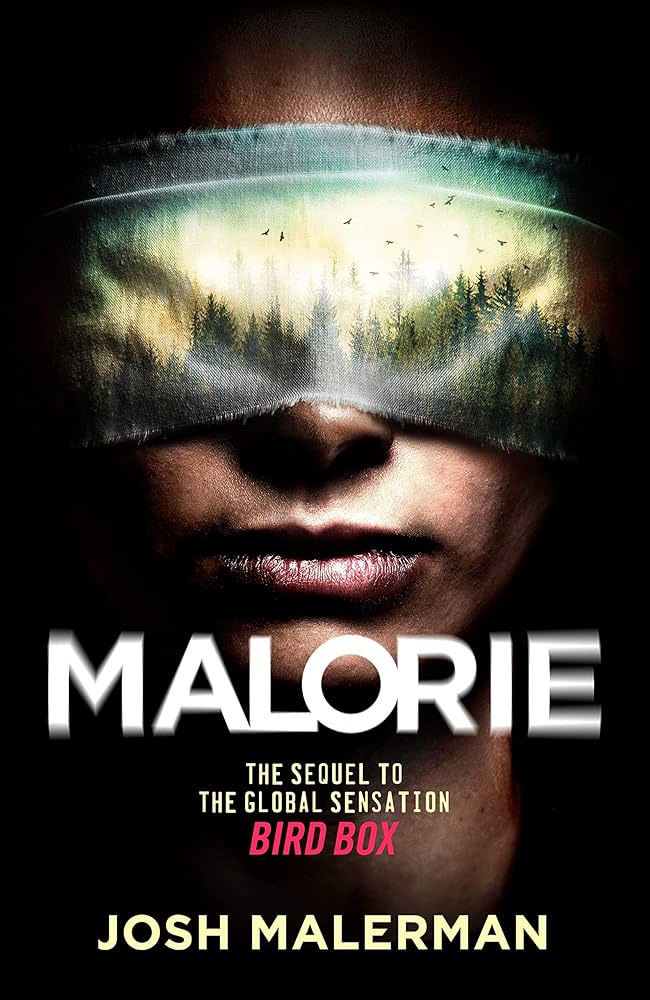
As a long-time lover of science fiction and dystopian fiction, I was keen to return to Josh Malerman’s blindfolded nightmare. Malorie, released on 21.07.2020, continues the Bird Box saga with a tense, disciplined focus on survival in a world where looking can kill. This sequel asks whether vigilance and love can coexist when the price of a single mistake is madness.
Malorie by Josh Malerman: A Bird Box Sequel Review
Malorie picks up years after Bird Box, with the eponymous heroine still parenting in extremis. The creatures are no less inscrutable, and the rules are as unforgiving as ever: no peeking, no complacency, no noise you cannot explain. Malerman returns to his stripped-back, nerve-fraying prose to show how routines become religion when the outside world is lethal. Published in 2020 (release date 21.07.2020), it is, quite fittingly, a Fortsetzung von „Bird Box“ mit dem Überlebenskampf in einer blinden Welt—an unblinking continuation of survival in a sightless world.
What distinguishes this sequel is its preoccupation with parenting under siege. Malorie’s fierce doctrine of safety collides with the curiosity of adolescence, and the result is friction that feels painfully human. The novel pits fear against hope: is isolation the only safe choice, or is the greater danger refusing to change at all? Malerman keeps the dread intimate—breaths counted, steps measured—while widening the moral field to include trust, autonomy, and the ethics of risk.
Without straying into spoilers, a tantalising message disrupts Malorie’s hard-won equilibrium and sends the family on a hazardous journey. Whispered rumours of research and resilient communities tempt them toward the uncertain light. Along the way, they encounter factions who claim to have adapted—people who insist they can live with the creatures, not merely around them. Whether these are pioneers or zealots is the novel’s queasy question, and Malerman mines that ambiguity to superb, heart-in-throat effect.
Sightless survival, a key quote, and teacup rating
Consider the book’s recurring refrain distilled to a single line: ‘Do not remove the blindfold.’ And here is a spoiler-free paraphrase of a pivotal moment: Malorie stands at a threshold, listening so hard it hurts; the house answers with breaths of wood and whispering leaves, each sound weighed like evidence in a trial. She chooses action anyway, because even caution becomes a cage when it never opens.
Malerman’s craft remains intensely sensory. He writes sound and touch the way others write colour and light: rope fibres biting the palm; the soft geometry of a folded cloth; the thrum of a distant thing you can’t safely see. The result is a survival manual of attention. The world is mapped in echoes and textures; trust becomes something you construct deliberately, brick by unseen brick. It’s a clever extension of Bird Box’s conceit and, for my money, a richer, more thematically layered application of it.
Teacup rating: 4.5/5 teacups. I’m reserving the half-cup because the novel occasionally circles familiar beats, but when it steps into new territory—especially the ideological clashes about how to live blind—it’s mesmerising. For fans of dystopian horror that doubles as a meditation on parenting, vigilance, and the cost of hope, Malorie is an easy recommendation.
Malorie delivers what I crave in sequels: continuity of tone with bolder questions. It honours the original’s suffocating tension while challenging the characters—and us—to consider whether survival is merely the absence of death or the presence of something worth living for. Brew a strong cup, cinch that blindfold, and read with your ears; the quietest sentences here are the loudest.