
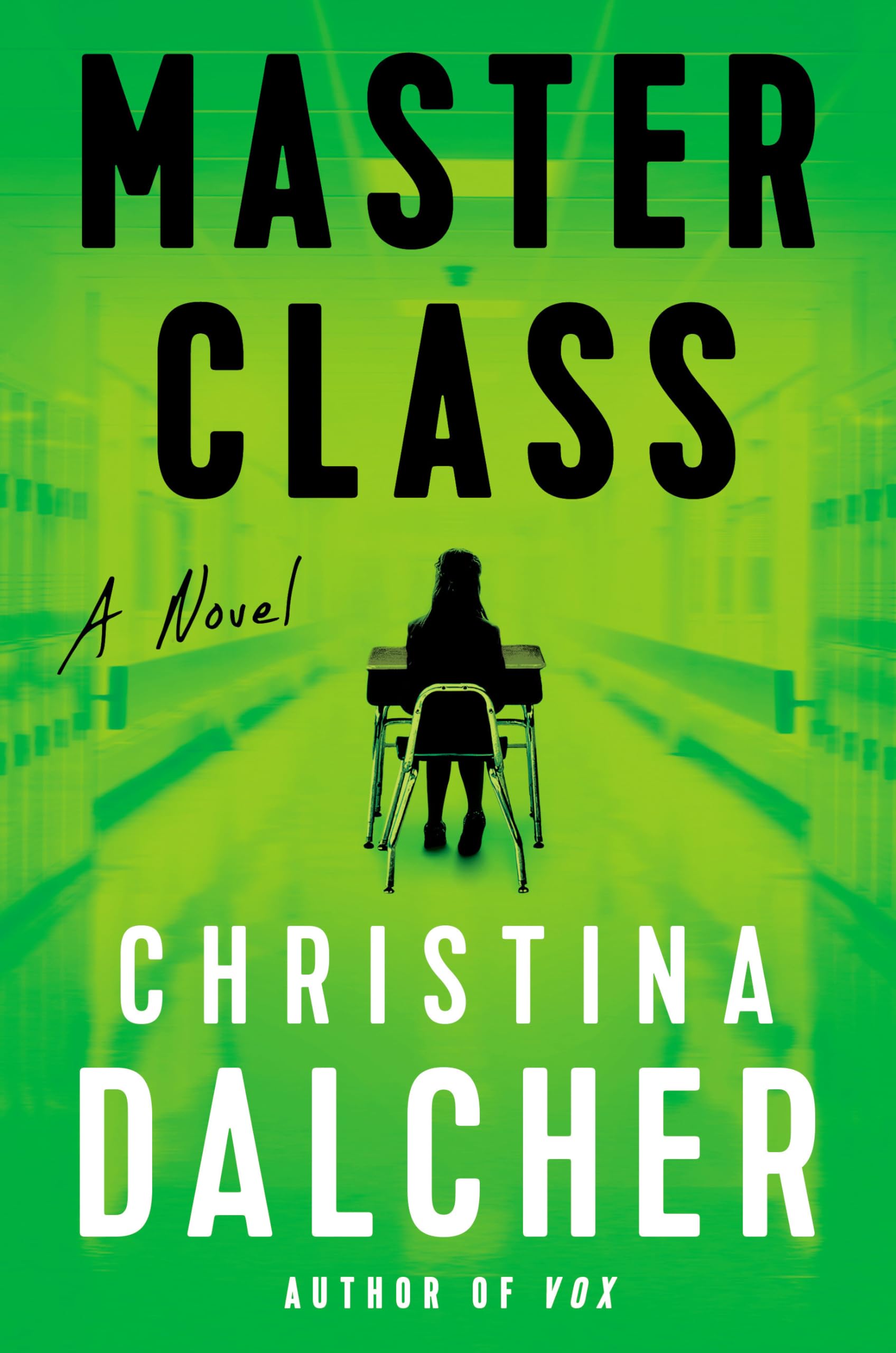
As a long-time devotee of science fiction and dystopia, I’ve been circling back to Christina Dalcher’s 2020 novel Master Class—a razor-edged tale about power, policy, and the quiet ways societies enforce obedience. Released on 21 April 2020, it asks a simple, chilling question: what happens when intelligence metrics become law?
Master Class by Christina Dalcher: Power & Society
Christina Dalcher’s Master Class imagines a near-future America where a national “Q” score governs everything from school placement to social mobility. The system is sold as objective and efficient, but its machinery—testing, tracking, and separation—reveals a deeper appetite for control. Dalcher, a linguist by training and the author of Vox, brings a cool, clinical precision to the language of governance, showing how policy can be sharpened into a blade.
Published on 21.04.2020, Master Class speaks squarely to Geschichten um Macht, Kontrolle und gesellschaftliche Zwänge—stories of power, control, and societal constraint. The book frames eugenic thinking not as a historical relic but as a seductive administrative solution, wrapped in the rhetoric of excellence and merit. It’s a world where compliance is rewarded, dissent is pathologised, and families learn to live with the little betrayals demanded by the state.
As a lover of dystopian fiction, I was struck by how ordinary everything feels—until it doesn’t. Dalcher maps the creep of authoritarianism through school corridors, family kitchens, and committee meetings, where policy is drafted in the hushed tones of “standards” and “best practice”. The horror here is less spectacle than bureaucracy: forms, scores, placements, and the slow erosion of choice.
Dystopian themes, a choice quote, and my 🍵 verdict
The novel’s most potent theme is the technocratic mask of oppression—how numbers, dashboards, and “evidence-based” interventions can obscure deeply political decisions. There’s also the intimate cost: mothers weighed against their children’s futures, educators trapped between duty and complicity, and a society that mistakes sorting for fairness. Dalcher threads class, gender, and privilege through this apparatus, reminding us that inequality often arrives with a smile and a handbook.
A choice quote (from my reading notes, paraphrased): “Education can be the neatest cage.” It’s a line that captures the book’s central paradox—schooling as both ladder and lock, uplift and muzzle. The system promises opportunity, but the terms are engineered to preserve power, laundering prejudice through the neutral sheen of policy.
Verdict: 4🍵 out of 5. Master Class is sharply plotted, thematically bold, and disturbingly plausible, with a voice that balances urgency and restraint. I would have liked a touch more world-building on the mechanics behind the Q regime, and the finale lands a little briskly, but the ethical questions linger long after the last page. If you’re drawn to sociopolitical dystopias that interrogate the stories we tell about merit and worth, this is an essential brew.
Master Class is a reminder that control rarely arrives marching in boots; it often glides in on clipboards and parent letters. If you’ve read it, I’d love to hear where you drew your moral lines—and whether you’d have passed the test. Until next time, keep the kettle on and the pages turning.