

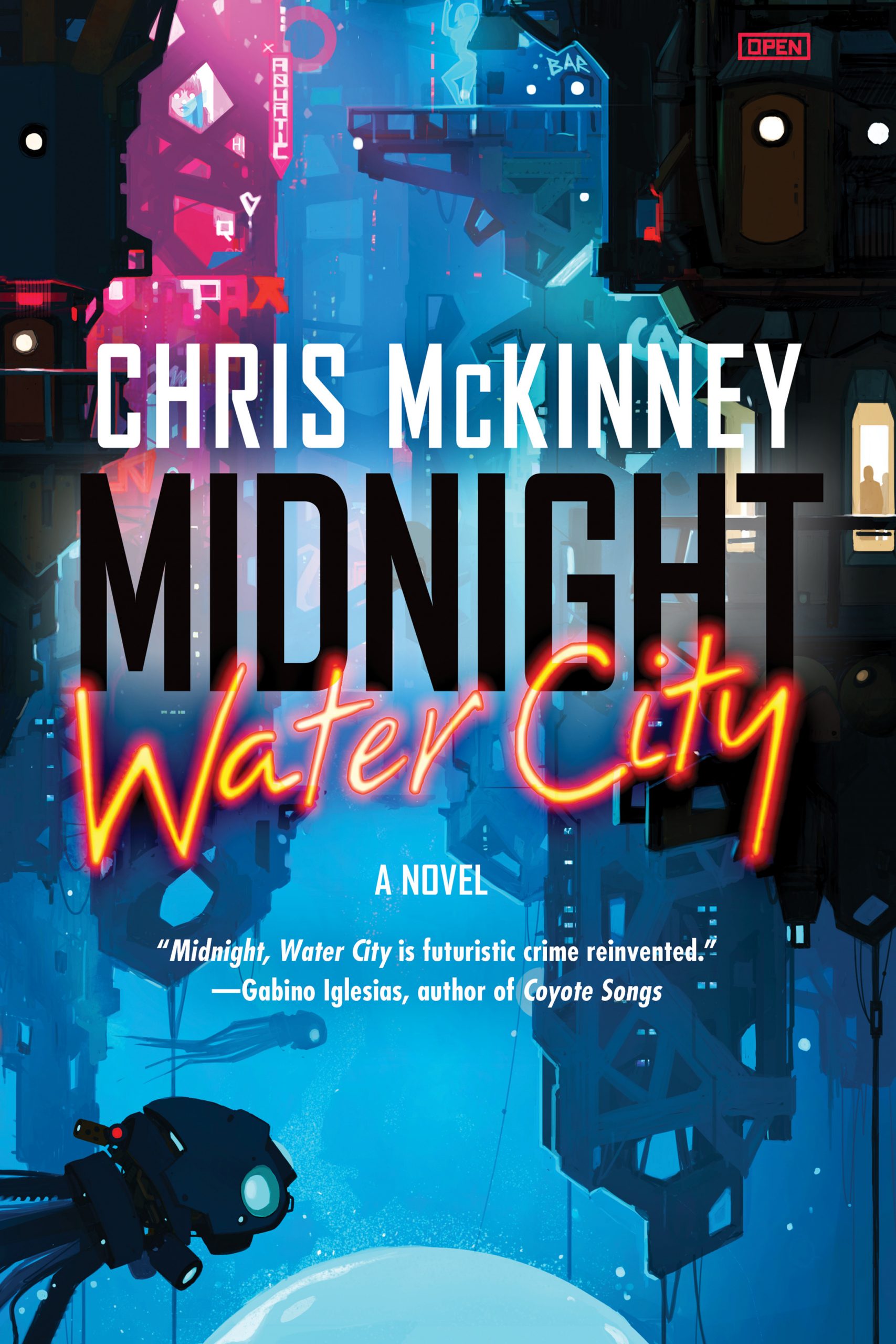
I’ve a soft spot for cities that creak and groan under the weight of their own futures, and Midnight Water City scratched that itch splendidly. Published on 13 July 2021 and shelved on my 2022 reading list, Chris McKinney’s novel imagines a metropolis half-drowned, half-digital—Eine Stadt zwischen Wasser und Technologie kämpft ums Überleben—a city fighting for its life at the tide line between climate collapse and high-tech hubris.
Midnight Water City by Chris McKinney: a drowned tech city
McKinney’s city rises like a rusted crown from black water—spires, skyways, and algae-slick service decks stitched together by drones and data. It’s a near-future noir that feels bracingly wet: rain that tastes faintly of metal, neon reflected off flood-slick surfaces, and a skyline redesigned for survival rather than beauty. The book’s atmosphere is heavy with brine and bandwidth, making every scene smell of salt and ozone while screens hum with the ceaseless murmur of prediction engines.
At the novel’s heart is a weary investigator pulled back into a case that has become almost myth: the death of an iconic scientist whose vision once promised a way out of the water. He’s no clean-cut saviour—more barnacle than blade—haunted by personal history and tethered to a city that never learned to stop sinking. As he wades through the silt of old loyalties and fresh lies, the mystery expands beyond a single crime into a reckoning with who gets to endure when the world runs out of dry land.
What impressed me most is how the book fuses climate dread with techno-thriller verve without skimping on heart. Surveillance capitalism, biotech evangelism, and the sediment of inequality are all here, layered like the city’s vertical neighbourhoods. The prose is lean but evocative, the worldbuilding tactile, the pace propulsive without feeling breathless. It’s dystopia with a pulse—recognisably ours, only wetter, sharper, and just a shade more merciless.
British sci‑fi/dystopia review: quote + 🍵🍵 rating
A line that captures the novel’s mood (paraphrased): When the ocean takes your city, it takes your secrets last. It’s the sort of sentiment McKinney threads throughout—equal parts mournful and hardboiled, the voice of someone who has learned to read truth from tide marks. The book speaks in the register of sea-stained gumshoe fiction, where memory is both clue and curse.
As a British reader of sci‑fi and dystopia, I loved the collision of pragmatic survival with near-future tech—flood defences doubling as status symbols, data markets sluicing through the gaps where governance has receded, and those haunting, vertiginous walks along maintenance gantries above dark water. If I’ve a quibble, it’s that a couple of late reveals arrive a touch neatly, but the emotional logic holds, and the world never stops feeling lived-in, latched together by stubborn human routine.
My verdict: 🍵🍵🍵🍵 (4/5). Midnight Water City is a briny, neon-lit noir with a conscience, a mystery that asks not just whodunnit but who gets to stay afloat when the bill for the future comes due. Released on 13 July 2021 and still resonant in 2022 and beyond, it’s a smart, atmospheric opener to a broader saga of water, memory, and the cost of invention.
If your taste runs to rain-slick streets, moral knots, and futures that feel uncomfortably plausible, Midnight Water City deserves a spot on your nightstand. Brew a strong cuppa, listen for the tide against the pilings, and let McKinney’s drowned tech city pull you under—just long enough to surface with something sharp and shining in your hands.