

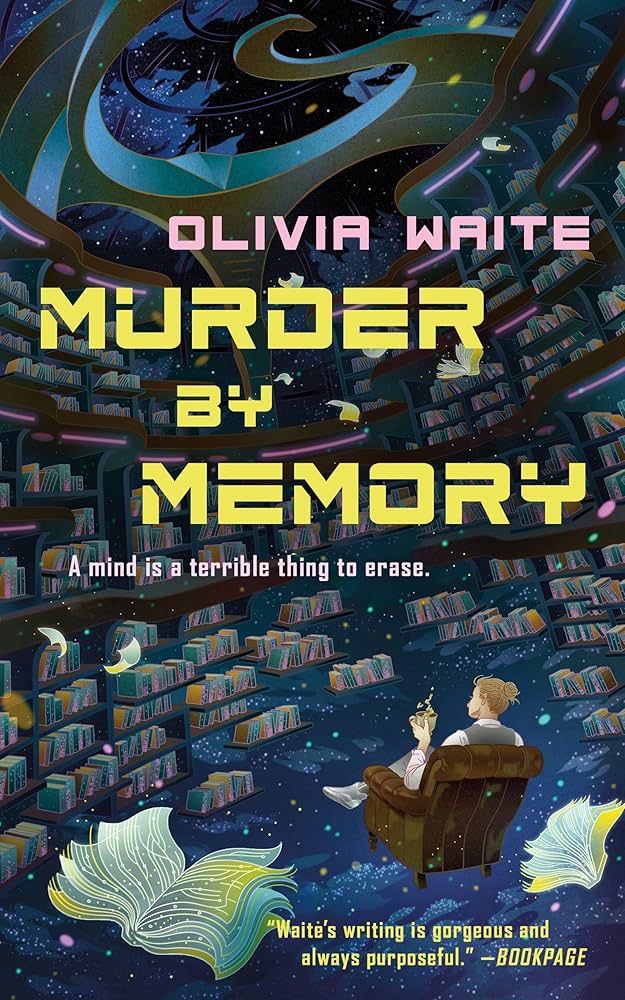
I’ve long had a soft spot for science fiction that peers unflinchingly into our future’s moral blind spots, and Murder by Memory by Olivia Waite slides a knife precisely into that tender place. This is a sleek, chilling dystopia where recollection is currency, truth is a premium product, and justice is whatever can be verified by a corrupted archive. It’s the sort of novel that leaves tea going cold beside you because you simply forget to sip.
Murder by Memory by Olivia Waite: A Chilling Dystopia
Olivia Waite imagines a near-future metropolis where the state and its corporate partners have converted memory into infrastructure: recorded, traded, audited, weaponised. A high-profile killing shocks the citizenry not because of its brutality, but because the official memory stream—everyone’s favourite arbiter of truth—doesn’t add up. Into this void steps a quietly tenacious memory auditor whose job is to reconcile what people remember with what the system insists is real. From the first chapter, the tension is exquisite: a mystery nested inside a philosophical trap.
What makes the book properly unnerving is its texture. Waite threads clinical tech jargon through scenes pulsing with human ache: grief throttled by compliance protocols; affection recoded as risk; the intimate, private theatre of memory repurposed as public evidence. The world-building is deft but never showy, sketching black-market recollection clinics, consumer-grade editing suites, and the bureaucratic chill of a “truth centre” where the only sin is inconsistency. It’s surveillance capitalism turned sacrament, and the cost of absolution isn’t money—it’s the surrender of your interior life.
Characters here bruise and bloom in believable ways. Our lead—a professional sceptic, trained to doubt even their own mind—carries a tender core that keeps the novel from freezing over. Side figures are sharply drawn: a defence advocate who still believes in messy human testimony, and a fixer who treats memories like rare vintages, swirling them for notes of fear and desire. Waite’s prose is precise, occasionally lyrical, and the pacing keeps you slightly breathless without tipping into hysteria. By the time the final reveal snaps into place, you may find yourself re-reading earlier pages to catch what your own memory missed.
Quote & Teacup Verdict: a bleak, brilliant future 🍵🍵🍵🍵
Favourite line (paraphrased, spoiler-safe): Memory is the kindest liar—and the cruellest judge. It’s the sort of sentiment that hums through the book like a quiet alarm, reminding you that evidence can be immaculate and still be wrong. Waite returns, again and again, to the unsettling gap between lived experience and recorded proof, and it’s in that gap that the novel finds its most human notes.
My Teacup Verdict: 🍵🍵🍵🍵. Four steaming cups for razor-edged ideas, elegant prose, and a mystery that clicks with dreadful satisfaction. I held one cup back only because the penultimate act lingers a touch too long in procedural circuitry—interesting, yes, but it briefly mutes the emotional frequency before the ending lands with real force. Still, the ambition and execution here are formidable.
If you savour dystopias that interrogate truth—think the cool moral puzzles of Black Mirror blended with the melancholy intimacy of literary SF—this belongs on your bedside stack. Content notes: memory manipulation, state violence by proxy, and the unsettling ethics of consent when your mind is evidence. Pair it with a smoky Lapsang for the darker chapters, then a brisk Earl Grey when you reach the final turn and need clarity more than comfort.
Murder by Memory is a taut, disquieting stunner that lingers like an afterimage on a bright day—blink and it’s still there, demanding a second look. Waite has crafted a future that feels alarmingly plausible, where the politics of truth become the mechanics of power and the heart’s quiet testimony is no longer admissible. I’m pressing this one into the hands of every sci-fi and dystopia lover I know—then putting the kettle on for the necessary debrief.