

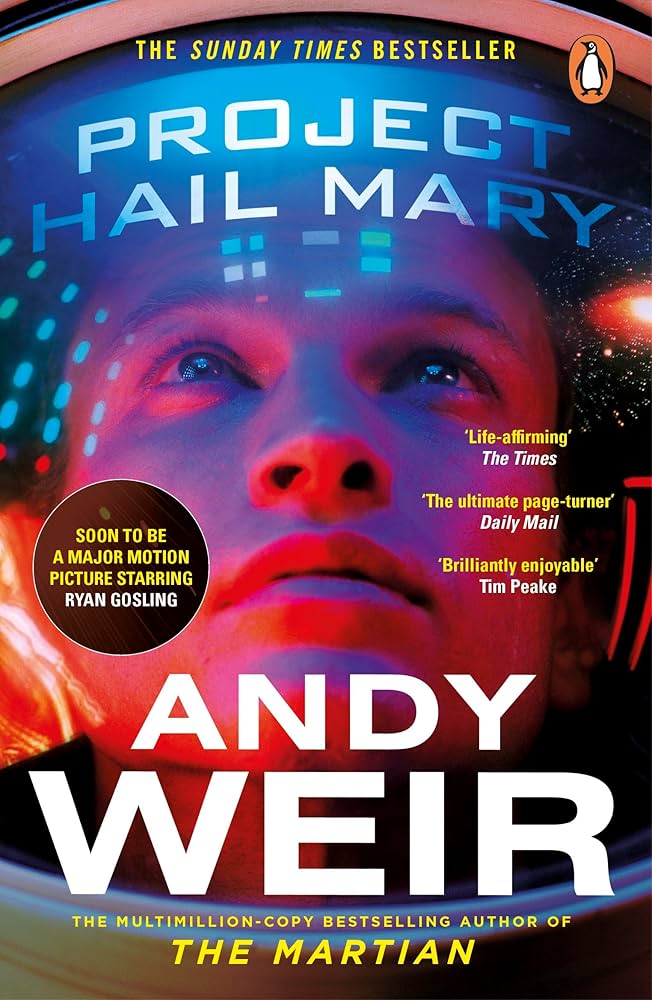
As a lifelong reader with a soft spot for brainy sci‑fi and end‑of‑the‑world stakes, I went into Andy Weir’s 2021 novel Project Hail Mary with high hopes—and came out grinning, teary, and slightly more in love with science. Published on 04.05.2021, it’s exactly what that brisk German line promises: ein Einzelner auf einer interstellaren Mission, um die Erde zu retten. It’s also a story about ingenuity, friendship, and the audacity to try when failure seems inevitable.
Project Hail Mary by Andy Weir: an interstellar rescue
Project Hail Mary opens with a blank slate: a lone man waking up on a spaceship with no memory and two dead crewmates. The very first line—“What’s two plus two?”—sets the tone: practical, curious, and desperate for a foothold. Slowly, he recalls he is Ryland Grace, a scientist turned reluctant astronaut, dispatched to investigate a stellar‑scale threat that’s dimming the Sun and dooming Earth. The mission is as simple as it is impossible: go interstellar, find answers, and come back with a way to save a planet.
Weir’s trademark strengths are all here: meticulous problem‑solving, white‑knuckle troubleshooting, and a narrator who wields humour like duct tape. The book pivots from claustrophobic survival to expansive first‑contact wonder, and the “rescue” in the title unfolds on more than one level. Grace isn’t only racing against cosmic biology and the ticking clock of a dying world; he’s piecing himself back together, memory by memory, until the stakes are painfully clear.
Without spoiling the novel’s best surprises, I’ll say this: the heart of Project Hail Mary is cooperation. The science is crunchy—orbital mechanics, energy budgets, chemistry that sings—but the soul lies in a cross‑species friendship that feels improbably warm and delightfully nerdy. For a fan of sci‑fi and dystopia like me, it’s a rare blend: end‑times urgency wrapped around a hopeful core, where cleverness and kindness are equally mission‑critical.
Review & rating: daring, brainy sci-fi to save Earth 🍵🍵🍵🍵
As a reader who adores hard science married to human stakes, I found Weir’s 2021 outing both daring and compulsively readable. The puzzle‑box structure—alternating between present‑tense survival and recovered memories—kept me turning pages at an indecent hour. The engineering set pieces are tense but comprehensible, and the solutions are satisfying because they’re earned, not hand‑waved.
There are moments when the infodumps get a tad dense, and a coincidence or two might feel conveniently timed. Yet the novel’s generosity—its big, beating heart—steamrolls those quibbles. The linguistic play, the cultural gap‑bridges, and the sheer delight of two very different minds collaborating made me smile in ways post‑apocalyptic fiction rarely does.
Verdict: four teacups out of five. 🍵🍵🍵🍵 Project Hail Mary is for readers who like their sci‑fi rigorous but not joyless; for dystopia fans who don’t mind a sunbeam cutting through the storm clouds; and for anyone who believes that curiosity can be heroic. It’s fast, witty, emotionally disarming, and, in the end, genuinely uplifting.
If your shelf tilts toward thoughtful space yarns and high‑stakes survival, brew a strong cuppa and strap in—Project Hail Mary delivers a cerebral thrill and a surprising dose of warmth. It may be a story about saving Earth, but its real triumph is how it reminds us that intelligence, empathy, and a willingness to collaborate are our best tools in the dark.