

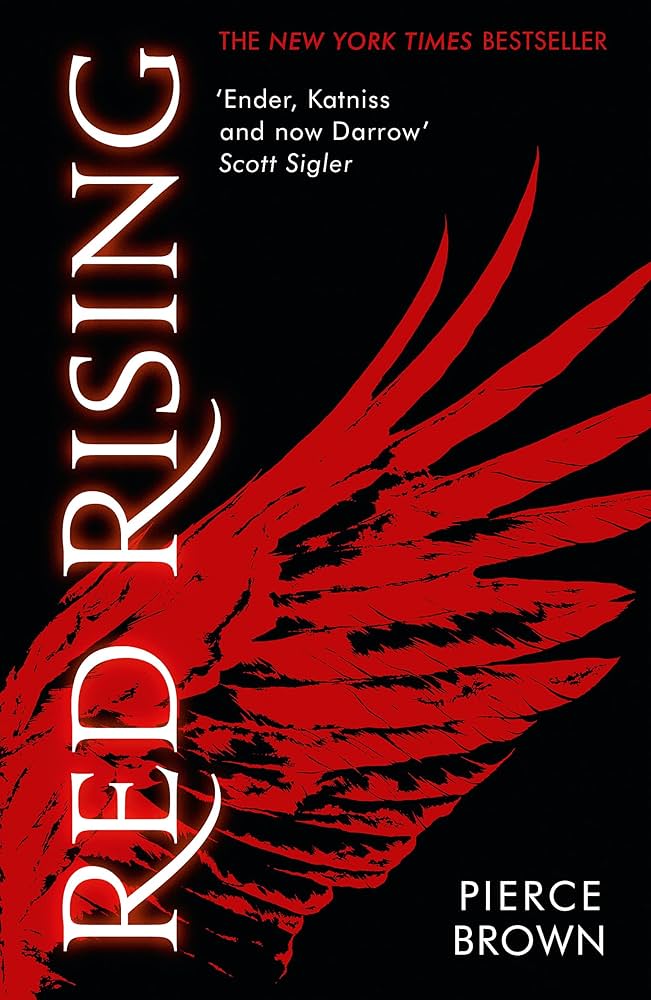
I’m a lifelong sci‑fi and dystopia enthusiast, and few modern debuts have gripped me quite like Pierce Brown’s Red Rising. First published in 2014, it’s a brutal, propulsive tale about caste, identity, and revolution set beneath the rust‑red dust of Mars. I came to it for the high concept, stayed for the ferocious heart, and left with a head full of sand, steel, and questions about what we’re willing to break in order to build something better.
Red Rising — Pierce Brown: Dystopian sci‑fi (2014)
Darrow is a Red, a helldiver in the mines of Mars, told that his people sacrifice so future generations might one day walk the surface. Brown wastes little time overturning that promise: Mars is already colonised, and Reds have been kept in ignorance to serve a gilded elite. This revelation pushes Darrow into the orbit of the Sons of Ares, who refashion him into a Gold so he can infiltrate the highest tier of a society stratified by Colours from Red to Gold.
The central crucible is the Institute, a vicious proving ground where patrician teenagers re‑enact conquest and governance with medieval cruelty and advanced tech. Imagine a Roman‑coded wargame meets boarding‑school nightmare, where alliances are struck over campfires and broken by dawn raids. Brown’s first‑person voice is breathless and bloody, revelling in strategy, reversals, and the theatre of power, as Darrow learns that ruling is as much about narrative as it is about force.
What elevates Red Rising is how its world‑building sharpens its themes. The Roman flourishes—houses, standards, laurel crowns—sit alongside gravBoots and gene‑craft, creating a society obsessed with hierarchy and myth. Slang and ritual thicken the atmosphere, while the moral weather stays tempestuous: can vengeance birth justice, or only more ash? The book nods to touchstones like The Hunger Games and Ender’s Game, yet it carves its own identity through relentless pacing and a fascination with the cost of leadership.
‘Rise so high, in mud you lie’ — 🍵🍵🍵🍵
“Rise so high, in mud you lie” threads neatly through Darrow’s journey. It’s a warning and a mirror: ambition doesn’t scrub away origin, and the climb itself can stain. The mud is literal—Lykos’s tunnels—and figurative: the compromises, lies, and brutalities required to move within Gold circles. Brown keeps asking whether changing the mask changes the man wearing it.
I’m pouring four teacups out of five. Red Rising is blisteringly readable, with set‑pieces that crackle and characters who snag the memory—Mustang’s poise, Sevro’s feral wit, Darrow’s molten resolve. At times the violence edges towards excess, a few twists veer melodramatic, and the Institute arc can feel like an extended game board. Yet the thematic spine holds firm, and the prose—lean, muscular, occasionally lyrical—keeps the pages snapping by.
I’d recommend it to readers who like their dystopia sharp with class critique and their sci‑fi seeded with knives, politics, and scheming. Expect graphic brutality, hazing, and cruelty; if those elements turn your stomach, tread carefully. If they don’t, Red Rising is a headlong plunge into rebellion that sets a ferocious stage for Golden Son and the rest of the saga.
With kettle whistling and heart still thudding, I’m happy to say Red Rising earns its place on my dystopian shelf: brash, bloody, and bigger in scope than its opening suggests. If you’ve read it, tell me which moment made you sit up straight and which character you’d follow into the darkness. I’ll be here, topping up the teapot and reaching for the sequel.