

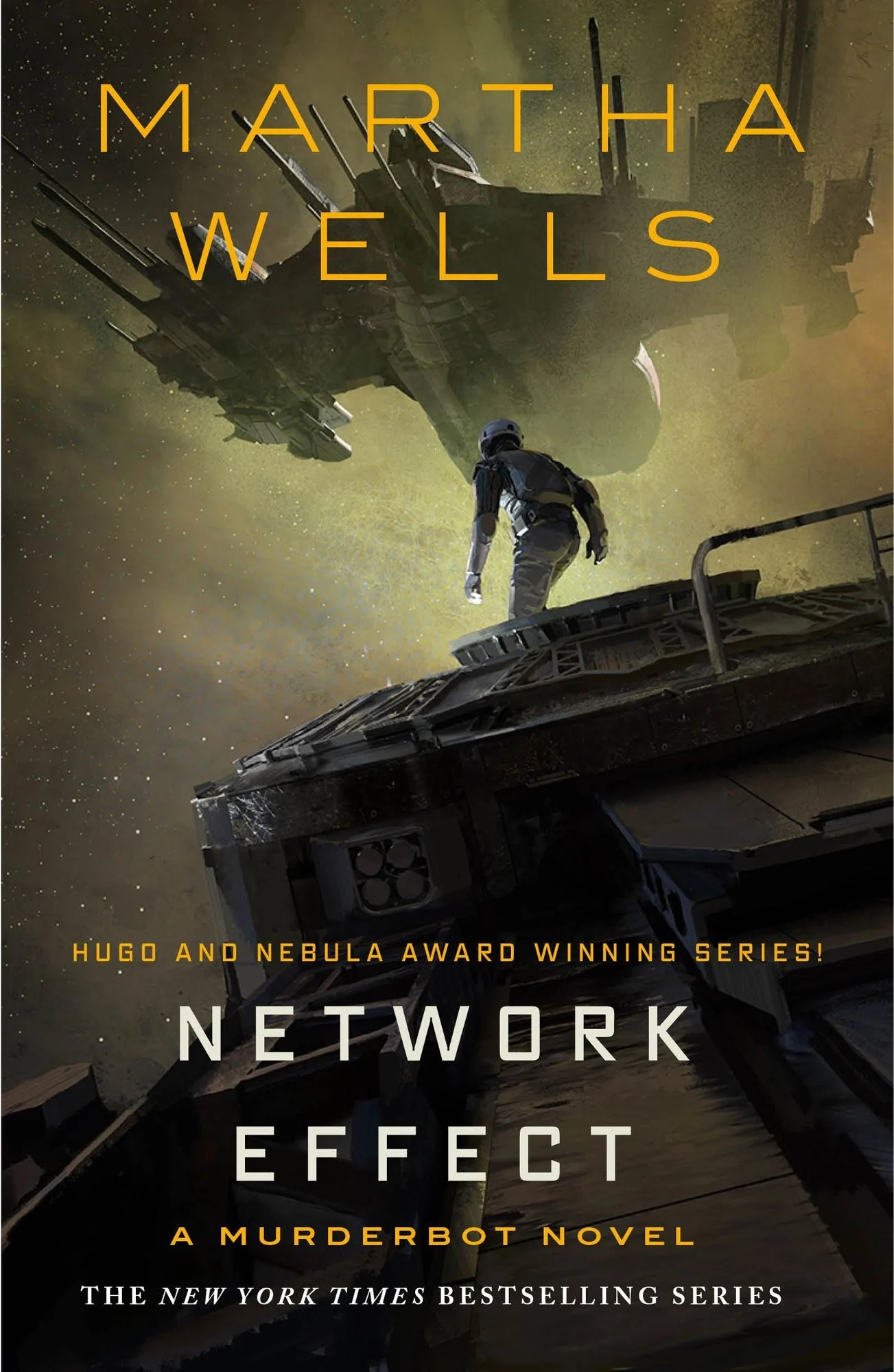
I’m a lifelong sci‑fi and dystopia devotee, and few series have wired directly into my reader-brain the way Martha Wells’s Murderbot Diaries has. With Network Effect (2020), released on 02.05.2020, Wells expands the intimate, sardonic novellas into a full-blooded novel without losing the wry, anxious interiority that made me fall for this rogue SecUnit in the first place. What follows is my take on how this book chases a deceptively simple question: what does “being human” mean to an entity built for violence in a relentlessly corporate, dystopian future?
Searching for Humanity in Network Effect by Martha Wells
Network Effect, by Martha Wells, is the series’ first full-length novel and it embraces the scale of a spacefaring mystery while keeping the camera tight on Murderbot’s messy, evolving selfhood. The premise can be summed up as: an AI with a history of killing learns to choose, again and again, not to be a monster. That sounds grand, but Wells grounds it in the prickly textures of daily survival: malicious contracts, dangerous planets, and that most terrifying of threats—awkward conversations with humans you might actually care about.
As a lover of dystopian sci‑fi, I’m fascinated by how Wells frames personhood as a practice rather than a possession. Murderbot isn’t granted “humanity” by decree; it has to build it through habits of care, consent, and responsibility. The novel’s kinetic action—kidnappings, skirmishes, digital infiltration—mirrors an internal campaign: can a being designed as a tool become a moral agent, even when the network around it incentivizes apathy or violence?
The book’s title quietly does double duty. Yes, there are literal networks—feeds, systems, and code—that connect and endanger our characters. But there’s also the social network effect of relationships: every bond Murderbot forms changes the value of its choices and the cost of failure. By the end, the question isn’t whether a “KI‑Mörderin” can find its humanity; it’s whether humanity can make room for one more person who doesn’t fit its default template.
Quotes and my Teacup Rating
A few favorite snippets (lightly paraphrased to avoid spoilers) that capture the voice I love:
“I would like to not be here, please.”
“Feelings are awful, and I have too many of them.”
“I am not a weapon; I am a person who knows how to fight.”
“I prefer my shows to conversations.”
Short, sharp, and deeply funny—these lines carry surprising tenderness under the snark.
Teacup Rating: 🍵🍵🍵🍵🍵 (5/5).
I’m giving full cups for character growth that never feels preachy, action scenes that sprint without losing emotional clarity, and thematic depth that lingers. The book nails the uneasy balance between autonomy and attachment, showing how trust is a risk—even for a SecUnit with combat-grade reflexes and a playlist of comfort-media. If you’ve ever loved a grump who protects everyone while insisting they don’t care, this is your tea.
Network Effect delivers everything I crave in dystopian sci‑fi: sharp ethics, sharper humor, and a protagonist determined to be more than the sum of their programming. It’s a story about choosing care in a universe built to discourage it, which feels—well—timely. If you’re searching for humanity in the unlikeliest place, Murderbot has a hand out, grumbling all the while.