

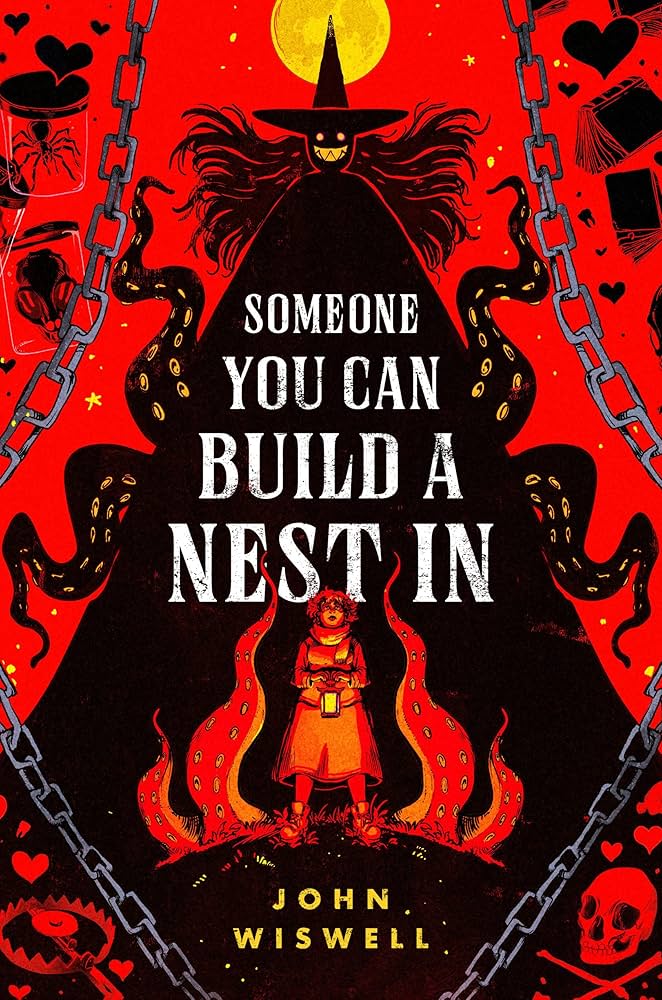
I’m a lifelong lover of speculative fiction—with a particular soft spot for sci‑fi and dystopian tales—and John Wiswell’s debut novel immediately called to me. Someone You Can Build a Nest In (2 April 2024) promised tender monstrosity, queer longing, and body‑horror with heart. It delivers all that and more, offering a story that’s as cosy as it is uncanny.
About the Book
John Wiswell’s novel is a gloriously strange, tender piece of speculative fiction that leans horror‑fantasy while speaking fluent sci‑fi in its curiosity about bodies, identity, and adaptation. Our narrator, Shesheshen, is a monster—think bone‑thief, shape‑shifter, patient architect of her own survival—who finds herself entangled with a human woman named Homily. What begins as a pragmatic brush with humanity curdles into something warmer and riskier: love, or at least its beautifully grotesque cousin.
Wiswell knows how to make viscera feel intimate rather than exploitative. The body‑horror here is tactile—cartilage, cavities, shells and sheaths—but the effect is oddly nurturing, like a gothic romance that swapped crumbling castles for living carapaces. As Shesheshen navigates human customs and her own perilous needs, the book becomes a meditation on consent, hospitality, and what it means to make a home in and with another being.
The worldbuilding is confidently sketched: villages with suspicious rituals, hunters and histories, and the ecological sense that monsters are a feature, not a bug, of this landscape. Yet the true magic lies in the voice—wry, curious, sometimes terrifyingly practical. I adored how the novel lets monstrous logic be both alien and reasonable; it’s a love story that never asks its protagonist to become “less” monstrous to deserve care.
Queer, tender SF body-horror
A favourite line (paraphrased): “I’m not looking for a cage; I’m learning how to be held.” It captures the novel’s gentlest tension—the difference between containment and care, between being possessed and being cherished. Even when the narrative turns sharp, the emotional core remains earnest, almost domestic in its attention to how bodies and boundaries meet.
Stylistically, Wiswell balances humour with hunger, and that balance is everything. Scenes that could tip into grim spectacle are instead suffused with curiosity and compassion; moments of romance are textured with teeth, shells, and cautious negotiation. As someone who grew up devouring sci‑fi and dystopia, I admired how this book reframes survival as collaboration rather than conquest. It’s rare to find a story where the monstrous is not a metaphor for evil but a lens for tenderness.
My verdict: 🍵🍵🍵🍵 out of 5 teacups. It’s a warm‑blooded, spine‑tingling gem with a few pacing wobbles in the middle act, but its originality and heart are undeniable. If you loved the intimate weirdness of T. Kingfisher or the humane monstrosity of Jeff VanderMeer—yet wished for a cosier, queerer embrace—this will be your cup of tea. Mind the body‑horror content, but if you can, let this novel hold you.
Someone You Can Build a Nest In is the rare book that made me feel simultaneously sheltered and unmoored—a careful braid of romance, horror, and speculative wonder. I came for the monster mythology and stayed for the tender, funny, careful way it reimagines love as a form of ethical architecture. Highly recommended for readers who like their tea strong, their hearts soft, and their fiction beautifully, bravely weird.