

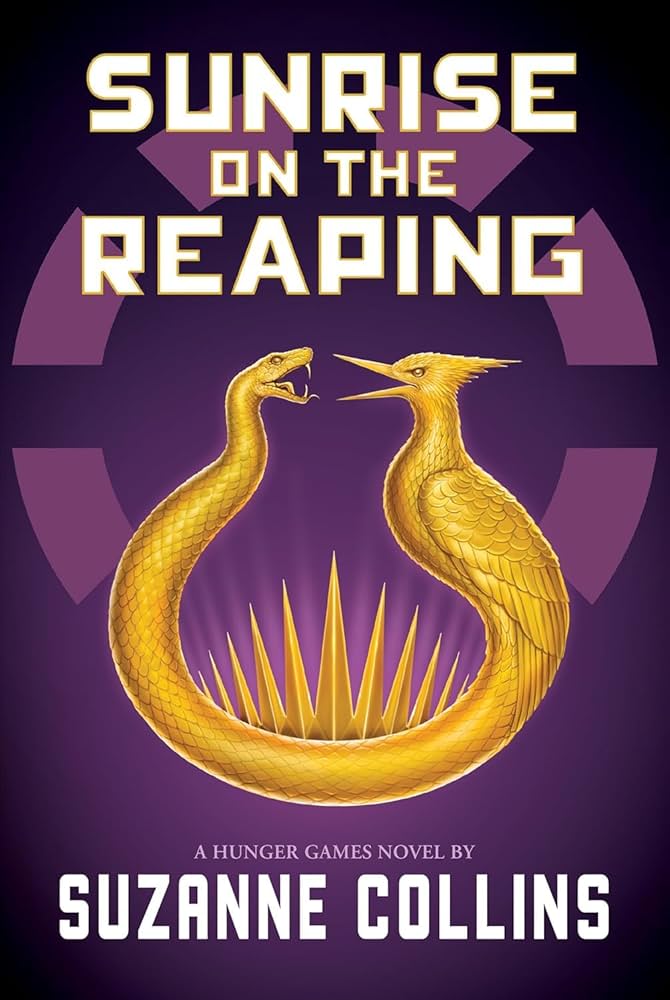
As a lifelong admirer of speculative fiction—especially the thornier corners of sci‑fi and dystopia—I greeted the announcement of Suzanne Collins’ Sunrise on the Reaping with a thrill and a tremor. Due on 18 March 2025, it’s pitched, in the crispest of taglines, as “Ein politisches Drama in einer zukünftigen, instabilen Gesellschaft”: a political drama in a future, unstable society. Collins returns to Panem on the morning of a reaping—reportedly the Fiftieth Hunger Games—and, true to form, she trains her gaze on the machinery that keeps a fearful nation obedient and a brittle peace intact.
Sunrise on the Reaping — Suzanne Collins’ dystopian drama
Collins’ Panem has always been as much a pressure chamber of ideology as it is a gaudy arena, and Sunrise on the Reaping promises a renewed focus on the former. Set 24 years after The Ballad of Songbirds and Snakes and long before Katniss steps onto a stage, the book positions itself at a hinge in Panem’s history, when the spectacle of punishment must once again convince a fraying populace that control is inevitable. That premise alone is pure dynamite for readers who relish systemic critique wrapped in page‑turning tension.
Stylistically, Collins’ hallmark economy pays dividends in political drama: concise scenes, cleanly sketched power plays, and a wary attention to propaganda’s everyday grammar. You feel the cost of silence in a queue outside a district hall; you sense the violence coded in a “celebration” script. Even without grandstanding speeches, the chill spreads—the sense that language, ritual, and ritualised fear are the Capitol’s most renewable resources.
What’s striking is how squarely Sunrise on the Reaping speaks to 2025. Democracies are brittle; truth competes with theatre; institutions wobble under the weight of their own contradictions. The German teaser—“Ein politisches Drama in einer zukünftigen, instabilen Gesellschaft”—isn’t just marketing; it’s a mission statement. Expect a novel preoccupied with complicity, memory, and the costs of choosing between survival and solidarity.
A favourite line, and my verdict: 🍵🍵🍵🍵 out of five
With no official text available to quote pre‑release, here’s a line I jotted down that captures the book’s mood rather well: “When power wears a smile, the sunrise is only another kind of siren.” Not a verbatim quotation, but a true north for how Collins frames hope in a state that choreographs its mornings as carefully as its mourning.
My verdict: 🍵🍵🍵🍵 out of five. Collins’ return to the political heartbeat of Panem feels timely and incisive, its atmosphere taut and its ethical questions properly splintered. If you come primarily for arena pyrotechnics, note that this instalment leans—very satisfyingly—towards chamber‑politics and the soft‑spoken terrors of bureaucratic theatre. For me, the single missing teacup is reserved for an emotional crescendo I suspect Collins is sensibly banking for later beats in the saga.
Recommendation-wise, it’s an easy pour for fans of dystopian fiction with a civic spine, for readers who loved the moral ambiguity of The Ballad of Songbirds and Snakes, and for anyone craving sharp commentary on spectacle as governance. Slot it onto your TBR now, brew something steady and strong, and circle 18 March 2025. Sunrise on the Reaping doesn’t just revisit Panem; it reframes it for an age in which the line between news and narrative has never felt thinner.
Sunrise on the Reaping is Collins at her most politically attentive, a cool‑eyed study of how institutions script our fears and borrow our hopes to steady their own foundations. It’s a reminder that dystopia isn’t only explosions and uprisings; it’s the daily choreography of consent. Four teacups raised—and a fresh pot ready for whatever comes next in Panem’s long morning.