

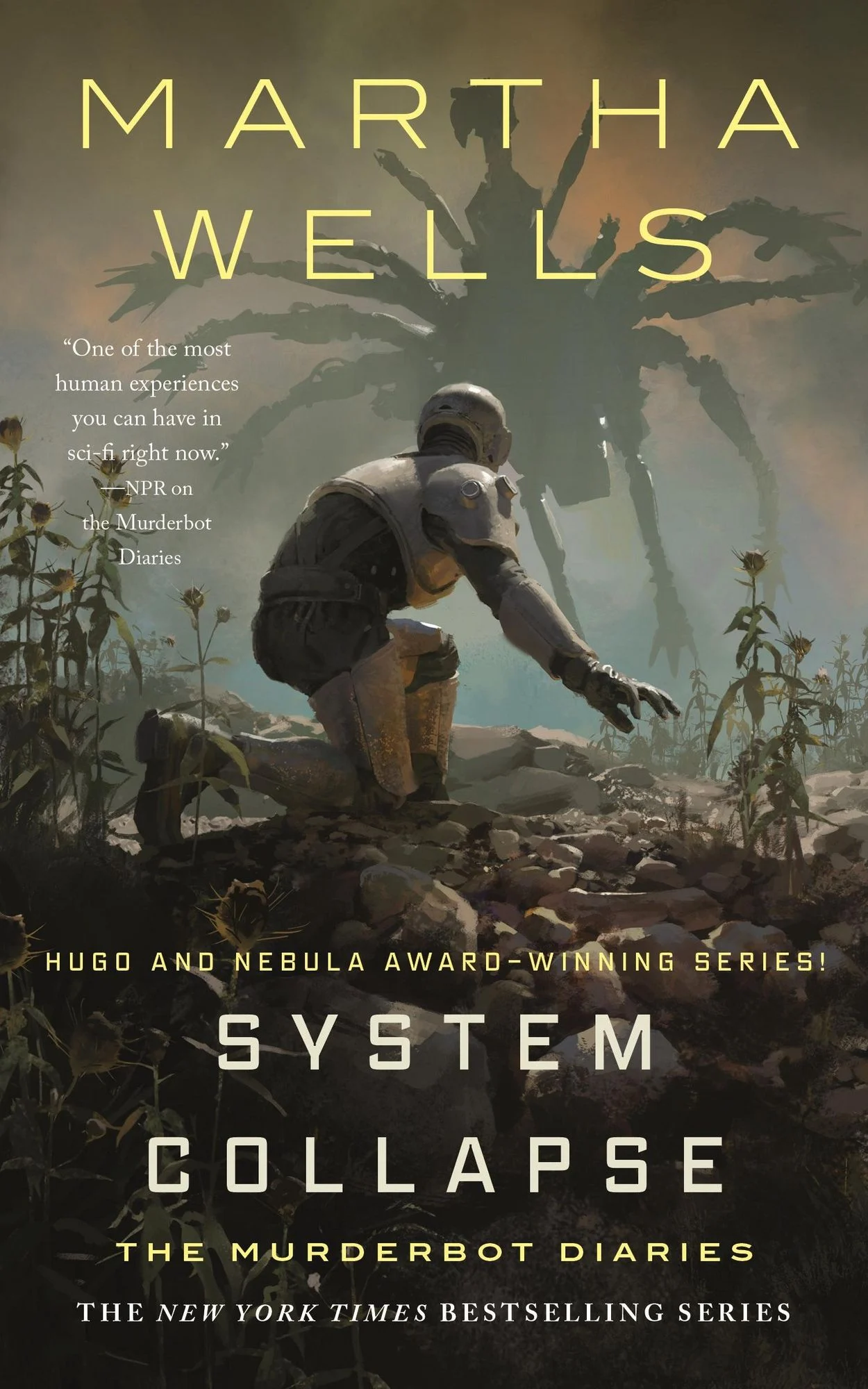
As a long-time lover of science fiction and dystopia, I’ve followed Martha Wells’s Murderbot Diaries with an almost embarrassing level of affection. System Collapse, published on 14 November 2023, is the seventh entry, and it knits together interstellar intrigue, corporate menace, and the personal cost of autonomy with the wry, prickly voice I return to this series for. If you’re here for AI identity under pressure, sardonic humour, and found-family stakes, this one more than delivers.
System Collapse (Murderbot Diaries #7) by Martha Wells
System Collapse (2023) is Martha Wells’s further chapter in her acclaimed series about AI, self-discovery, and interstellar adventure. It arrives as a sharp, character-driven continuation, picking up threads of consequence and compassion, and framing them against a hostile corporate cosmos. The release date—14.11.2023—felt apt: a late‑year reminder that hope often emerges from the debris of difficult choices.
Wells keeps the focus tight on Murderbot’s internal state while carefully widening the lens on the people and systems it’s sworn (begrudgingly) to protect. The plot circles the kind of mission where every corridor feels like a trap, every negotiation a coin toss, and every system diagnostic a potential betrayal. It’s tense in a quietly relentless way, powered by a voice that would rather stream favourite media than talk about feelings—and yet, inevitably, talks about feelings.
What makes this instalment sing is the balance of brisk action and intimate character work. Wells writes clashes that are clever rather than showy, and conversations that reframe peril through care and consent. The prose is crisp, funny, and suspicious in that quintessential Murderbot fashion, but there’s a tenderness threaded through the sarcasm: a recognition that survival isn’t only a tactic; it’s a relationship.
A tense, witty tale of AI identity, peril, and hope
System Collapse digs deeper into the ethics of autonomy: what it means for an AI to choose, and to keep choosing, when fear and obligation collide. Murderbot’s identity is not a solved puzzle but an ongoing practice—uneasy, iterative, and honest. The way it navigates trust with humans and other AIs alike (with all the awkward sincerity that implies) gives the book its emotional ballast.
Peril here is both external and internal. Yes, there are hostile environments, opaque corporate schemes, and tactical puzzles that require precision and nerve. But there are also system faults, memory gaps, and the cold dread of not being able to trust your own processes. Wells translates those glitches into palpable stakes, making every decision feel like stepping onto a moving walkway that might not be there.
Despite all that, this is a hopeful novel. Hope arrives not as a grand speech but as a series of small, stubborn acts—choosing to protect, choosing to listen, choosing to stand down when violence would be easier. The humour is dry and humane; the optimism hard-won. For readers of character-first sci‑fi, for anyone curious about how personhood can be engineered and still feel real, this is a standout.
Favourite line (paraphrased, spoiler‑free): “Caring is terrifying; failing them would be worse.” System Collapse captures exactly why The Murderbot Diaries matter: they’re about agency that isn’t loud, loyalty that isn’t simple, and survival that doesn’t erase tenderness. My rating: 🍵🍵🍵🍵🍵 (5/5). A must-read for fans of AI narratives, corporate dystopias, and anyone who likes their space opera with a side of wry, British‑adjacent snark and genuine heart.