

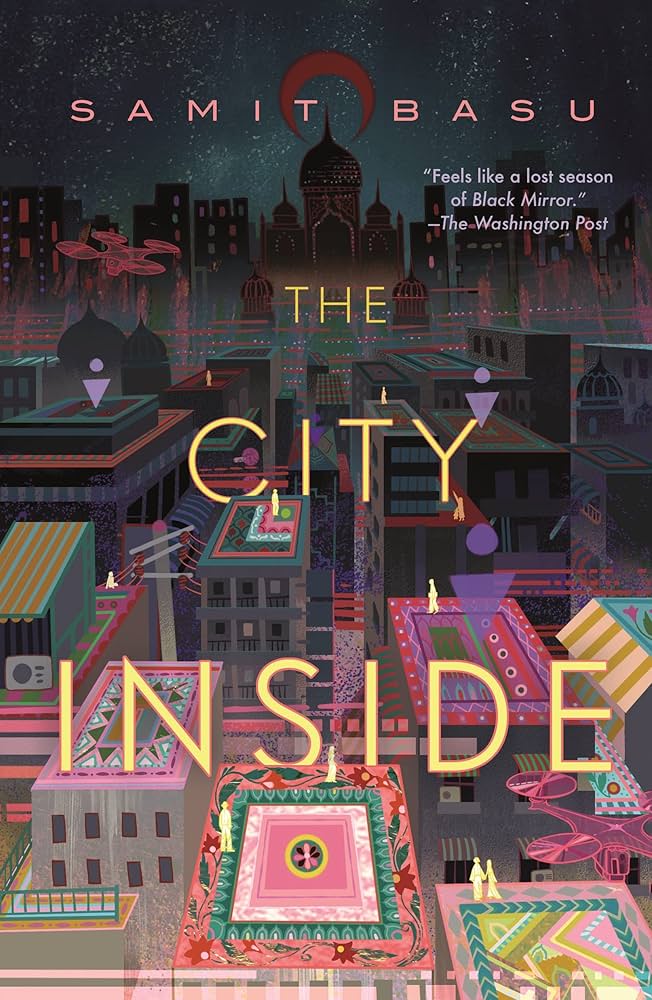
I’m a lifelong sci‑fi and dystopia devotee, and Samit Basu’s 2022 novel The City Inside hit that sweet spot where near‑future speculation feels disquietingly present. Published on 07.06.2022, it’s a taut, character‑driven tale set in a hyper‑mediated Delhi where every feed is curated, every mask is marketable, and secrets are a currency. In short: a dystopian city full of secrets and social tensions.
The City Inside by Samit Basu: a tense dystopia of secrets
Basu imagines a Delhi of tomorrow that’s just a few UI updates away from ours: streaming empires, influencer dynasties, corporate‑state alliances, and an ambient hum of crisis management. Climate anxiety, communal flashpoints, and the algorithmic hunger for engagement structure daily life, while the privileged glide through gated comfort and the precarious scramble beneath the dashboards. It’s recognisably our world—only slightly reframed, as if someone nudged the contrast slider on reality.
At the heart of this world are people working on both sides of the glass. Joey is a sharp, overworked producer‑manager for livestream celebrities, a fixer in a business where “authenticity” is engineered and monetised. Rudra, a withdrawn scion of an influential family, wants desperately to opt out, yet finds himself pulled back into networks of power he cannot fully escape. Their orbit—friends, rivals, clients, and watchers—becomes a pressure cooker where past choices and present loyalties collide.
Basu keeps the tension taut without sacrificing texture. He sketches NDAs and neighbourhoods with the same care, showing how hashtags, heritage, and hush money all interlock. The prose moves briskly, studded with sly wit and flashes of tenderness that make the city’s systemic chill hit harder. By the time the larger conspiracy unfurls, we’ve already understood the smaller, everyday compromises that made it possible.
Review with quote: social tensions laid bare 🍵🍵🍵🍵
“As one succinct German tagline puts it: ‘Eine dystopische Stadt voller Geheimnisse und sozialer Spannungen.’” That line captures the book’s pulse. The City Inside is less about gadgetry than about power: who wields it, how it performs itself in public, and how it reproduces quietly in private. Nepotism, surveillance capitalism, and communal politics each leave fingerprints on characters’ lives—on their housing, their jobs, their relationships, and even the risks they’re allowed to take.
What impressed me most is how Basu moves from micro to macro without tub‑thumping. A tweak in a content policy ripples into a street protest; a family demand becomes a career detour; a moment of courage transforms a feed and then a crowd. Outrage is rewarded, activism is commodified, and safety is revealed as a resource purchased or inherited rather than earned. The result is a social thriller where the chase often happens in group chats and contracts, not just on roads.
I’m giving this one four teacups out of five: 🍵🍵🍵🍵. The worldbuilding is vivid and horribly plausible, the character work compassionate, and the momentum relentless. If I hold back a cup, it’s only because a few transitions feel slightly abrupt and the information flow occasionally clogs under its own richness. Still, this is a fiercely contemporary dystopia—timely without being didactic, and entertaining without letting anyone off the hook.
If your palate runs to near‑future fiction that swaps laser fire for legal clauses, trending tabs, and the quiet terror of being watched, The City Inside is a superb pour. Brew a strong cup, settle in, and let Basu’s 07.06.2022 vision of Delhi hold a mirror to the timelines we already scroll.