

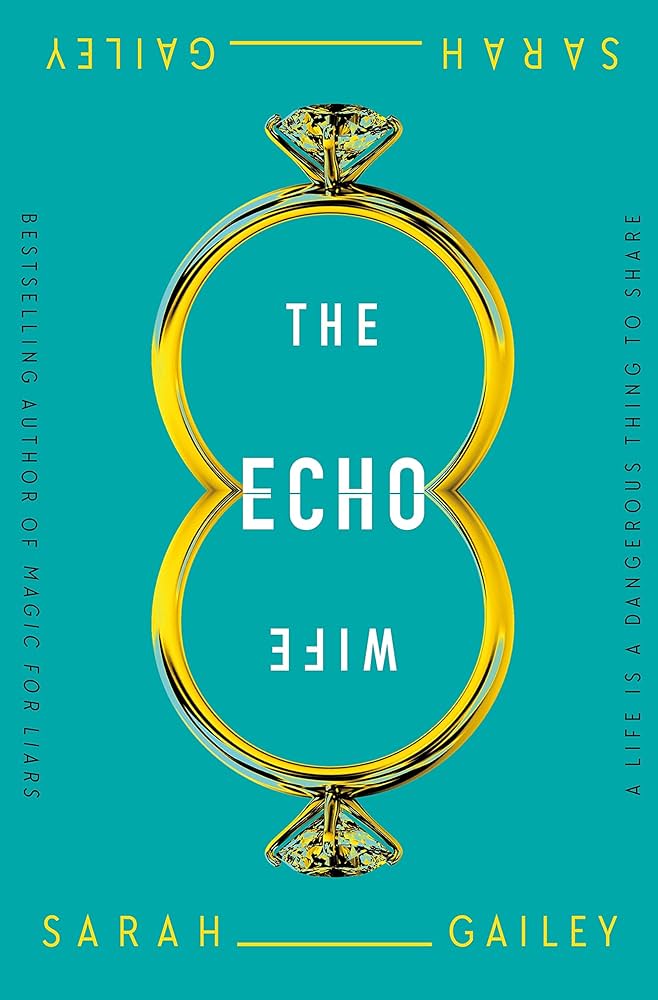
Sarah Gailey’s The Echo Wife is a razor-edged, 2021 sci‑fi thriller about cloning, secrets, and the messy tangle we call love. Published on 16.02.2021, it’s a novel that turns the laboratory into a confessional and the body into a battleground, asking what it means to be made — and to make ourselves — under impossible pressures.
The Echo Wife by Sarah Gailey: cloning, love, ethics
Sarah Gailey’s 2021 novel The Echo Wife introduces Evelyn Caldwell, an award‑winning cloning pioneer whose breakthroughs are as elegant as they are ethically volatile. When her husband steals her research to create Martine — a clone fashioned to be the “better” wife — things spiral into a taut domestic noir. The release date (16.02.2021) is etched in my memory because this book landed like a grenade in conversations about autonomy and authorship. As the German tagline neatly puts it: “Eine Wissenschaftlerin confrontiert die ethischen Grenzen von Klonen und Liebe.”
What gripped me most was the book’s steady, scalpel‑clean dissection of consent and personhood. Is a clone property, patient, partner, or something else entirely? Gailey never reduces cloning to a mere plot gimmick; instead, they push us into the murk where responsibility and power blur. Who owns a body created in a lab? Who bears the moral aftermath when that body suffers or resists? The narrative keeps circling these questions without ever letting us relax into easy answers.
Underneath the science beats a bruised, complicated heart. The Echo Wife is not just about love so much as the conditions under which love becomes possible — or poisonous. It explores devotion as design, affection as programming, self‑love as survival, and the ways women are asked to become versions of themselves to placate others. Gailey teases out a tender, frightening truth: love can be both sanctuary and trap, especially when someone else thinks they know who you’re meant to be.
A quotation and 🍵 rating for The Echo Wife by Sarah Gailey
“I am very good at my job.”
It’s a compact line, but it echoes through the book like a metronome. On the surface it’s professional swagger; beneath, it’s armour — a reminder that competence can be the last refuge when one’s life, body, and story are contested. The Echo Wife keeps returning to the cost of that armour and the risk of mistaking mastery for safety, or precision for intimacy.
My rating: 4.5/5 🍵. Gailey’s prose is crisp and needling, the ethical knots satisfyingly tight, and the domestic‑thriller pulse unputdownable. A tiny wobble in middle‑act momentum aside, this is top‑shelf speculative fiction — unsettling, incisive, and oddly compassionate. If you like your sci‑fi brewed strong with moral complexity, pour yourself a cup and dive in.
The Echo Wife left me stirred and a little scorched — the way the best speculative tales do. It’s a sharp reminder that the stories we tell about our bodies, our work, and our love lives can create us as surely as any lab process. And sometimes, choosing who we become is the bravest experiment of all.