

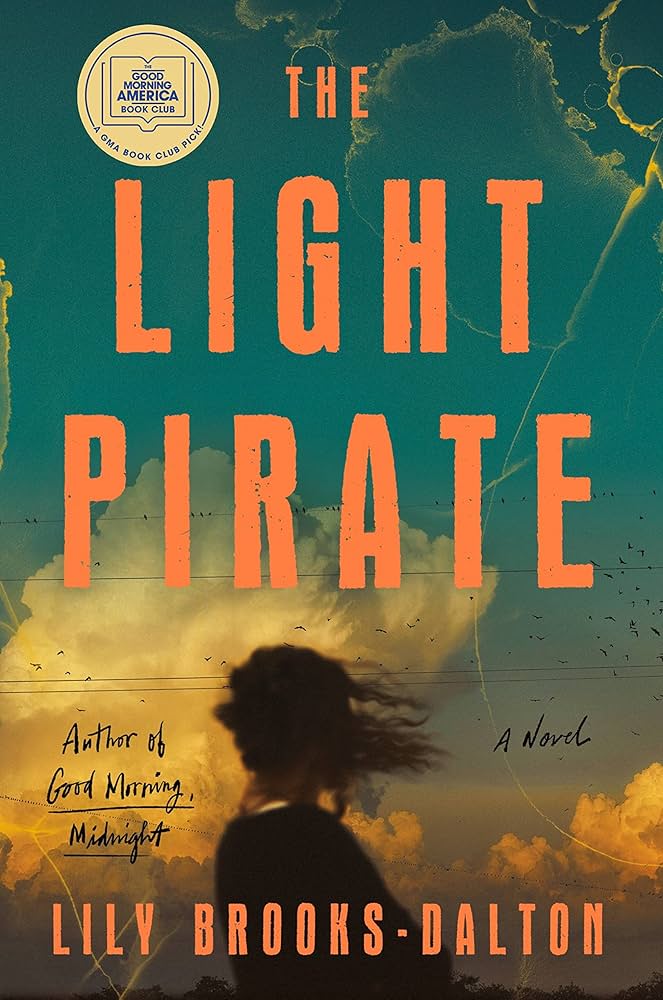
As a long-time devotee of sci-fi and dystopian fiction, I’m always hunting for novels that make the speculative feel startlingly present. The Light Pirate by Lily Brooks-Dalton does exactly that: a climate-collapse tale set in Florida that doubles as a tender coming-of-age amid chaos. Published on 06 December 2022, it’s a luminous, unsettling, and strangely hopeful story about learning to live with a changing world rather than against it. Short description: Climate collapse in Florida – a coming-of-age story in chaos.
The Light Pirate by Lily Brooks-Dalton: climate coming-of-age
The Light Pirate traces a young girl’s growth against the backdrop of a Florida sinking under storms, blackouts, and saltwater. It’s climate fiction, yes, but it’s also a closely observed portrait of becoming—what it means to form an identity and an ethic when the ground itself is literally giving way. As a reader who adores dystopias, I was struck by how gently the book treats transformation: not as a single cataclysm, but as a long apprenticeship to change.
There’s a marvellous sense of scale here. Big systems crumble in the distance—grids, supply lines, roads—while the intimate work of surviving adolescence fills the foreground. The novel asks how a child grows upright in a world tilting sideways. The answer, rendered in Brooks-Dalton’s clear, lyrical prose, is incremental: learning the currents, reading the wind, finding and keeping the people who won’t look away. It is, in spirit, a coming-of-age that rejects nostalgia and chooses attention.
I loved how the book refuses to make resilience synonymous with hardness. Growth arrives as softness that’s disciplined, as curiosity sharpened into craft. In that way, it reminded me why I return to climate narratives: not to be punished, but to witness new forms of care. Favourite line (paraphrased): “We adapt or we vanish; the tide doesn’t care.” The novel doesn’t wag a finger; it opens a door.
The Light Pirate by Lily Brooks-Dalton: storms and resilience
Set against relentless hurricanes and rising seas, the story turns storms into tutors rather than mere antagonists. Each landfall rearranges more than streets; it rearranges priorities, loyalties, and the very map of possibility. The book excels at this meteorological intimacy—squalls, stillness, the electric hush before a surge—so that weather becomes as much a character as any human.
Resilience, crucially, is not framed as a rugged individualist fantasy. It’s improvised, communal, and ecological. People barter knowledge, share shelter, and learn new rhythms; the coastline itself teaches what stays and what’s carried away. I found myself slowing down as I read, as if the prose coaxed me into the careful attention that survival requires. The effect is quietly radical: resilience as a choreography with the world, not a fight against it.
For lovers of dystopia and cli-fi, there’s plenty of the genre’s grit—scavenging, loss, dwindling resources—but Brooks-Dalton leavens it with wonder. Light, flora, and tidepool magic punctuate the wreckage. That balance makes the novel linger: it’s sobering without despair, urgent without panic. If you’ve ever wanted a story that respects both the science and the soul of the storm, this is it.
The Light Pirate is a beautifully crafted, unsettling, and compassionate vision of how a person—and a place—learns to live differently when the old rules fail. As a sci-fi and dystopia enthusiast, I admired its patient world-building and the ethical clarity of its coming-of-age arc. My rating: 4/5 🍵🍵🍵🍵. Recommended for readers who crave climate fiction that’s as attentive to human tenderness as it is to environmental truth.