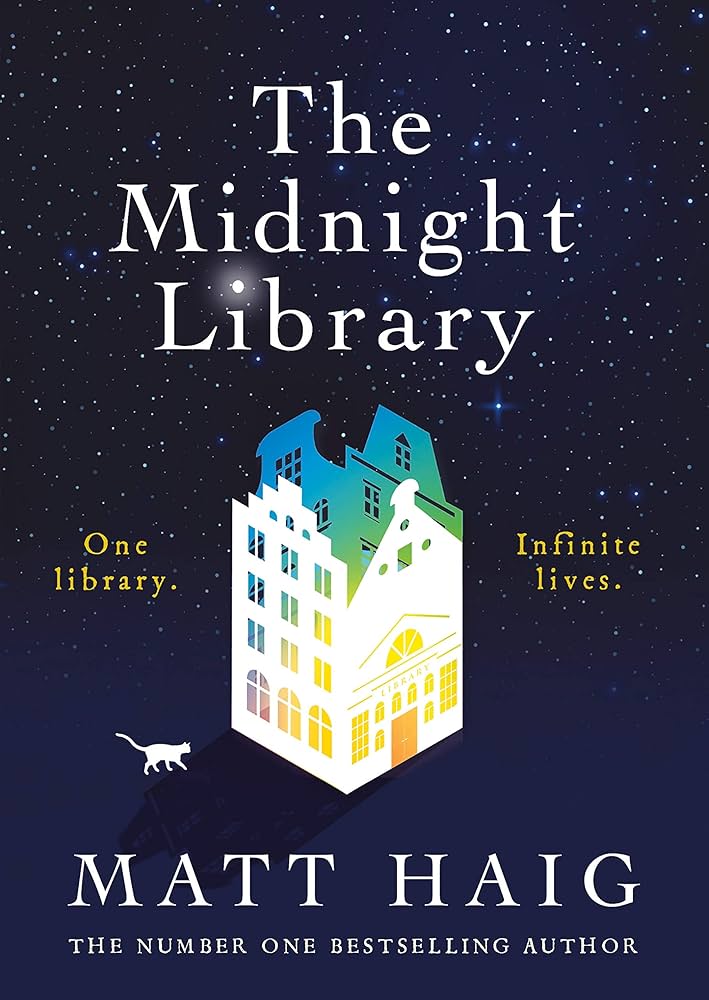
I’m a lifelong book-lover with a soft spot for science fiction and dystopias, and Matt Haig’s The Midnight Library ticked all my favourite boxes: a speculative premise with a humane heart, and a quiet fascination with the paths not taken.
The Midnight Library by Matt Haig: choices and other lives
Matt Haig’s The Midnight Library, released on 29 September 2020, became a much-talked-about read through 2021 for good reason. It blends SF elements with a gentle philosophical enquiry into regret, possibility, and the small hinge on which a life can turn. As someone who adores speculative fiction that puts people first, I found its premise immediately irresistible.
The conceit is elegant: between life and death there is a library, and every book opens onto an alternative life you could have lived had you chosen differently. Haig uses this “what if” architecture to illuminate how our decisions—big and tiny—reverberate through identity, relationships, and meaning. The novel asks whether the lives we fantasise about are any more “true” than the one we’re trying to leave behind, and what it takes to call any life enough.
Though grounded in SF Elemente, it isn’t hard sci-fi; rather, the speculative device is a compassionate frame for exploring mental health, disappointment, and hope. In German, the book might be summarised as: “Eine Bibliothek, die alternative Leben erforscht, beleuchtet die Bedeutung von Entscheidungen”—and that’s precisely what it delivers, with warmth and clarity. It’s a story that sits comfortably between genre and literary fiction, inviting a wide readership.
A brief review with a quote and 🍵🍵🍵🍵 rating
Haig’s prose is accessible and quietly lyrical, and the episodic visits to alternate lives feel like well-curated case studies of regret. A few passages edge towards the didactic, but the emotional honesty earns them; the narrative manages to be both comforting and bracing, like stepping into cold air after a cosy room. For readers of speculative morality tales—think gentle Black Mirror without the dread—this is nourishing fare.
“Between life and death there is a library.” It’s a simple line, but it captures the novel’s charm: a liminal space where stories become choices and choices become stories. The quote also signals how the book reclaims the idea of possibility from anxiety, suggesting that curiosity about other lives can guide us back to a more forgiving view of our own.
My rating: 🍵🍵🍵🍵. Not quite five, because the pattern of sampling lives can feel predictable, and some resolutions arrive a touch neatly. But the humane core, the deft handling of despair and meaning, and the elegant speculative set-up make it an easy recommendation. Brew a pot of tea and let the “what ifs” unfold—you might leave with a kinder lens on your own choices.
The Midnight Library reminded me why I love speculative fiction: it lets us test the edges of reality to see our everyday lives more clearly. If you’ve ever lingered over a crossroads, this tender, time-bending tale is a companionable guide. I’d love to hear which “other life” chapter resonated most with you—pop your thoughts in the comments over a cuppa.