

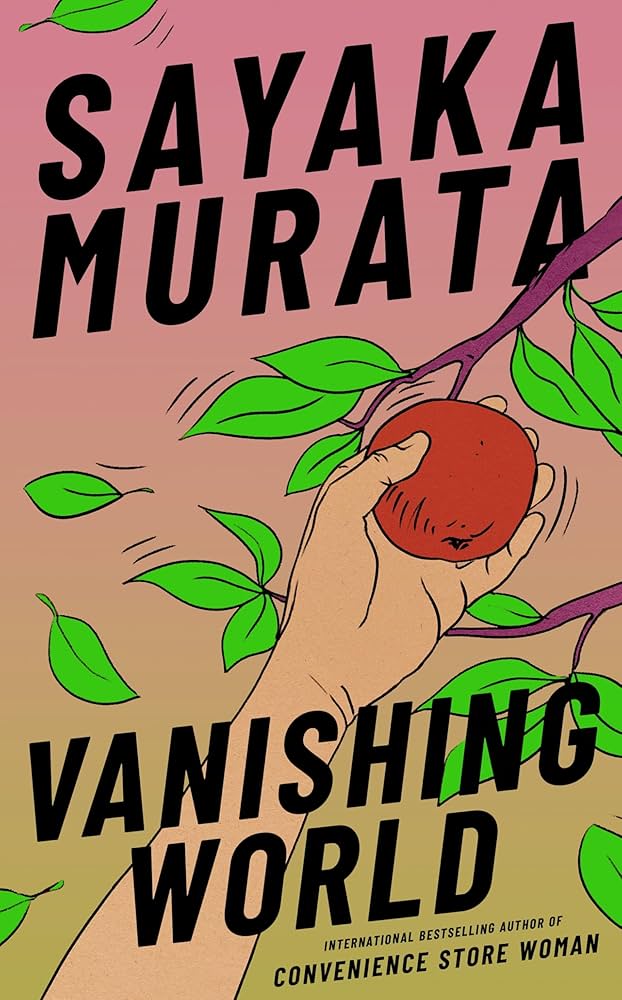
As a long-time devotee of speculative fiction—especially the strange borderlands of sci‑fi and dystopia—I couldn’t resist diving into Sayaka Murata’s 2025 novel Vanishing World, released on 17 April 2025. Pitched as “a dystopian vision of Japan with a critical perspective on society and environment,” it delivers exactly that: an unnervingly lucid eco-nightmare that cuts close to the bone.
Vanishing World by Sayaka Murata: a stark eco-dystopia
Murata’s Vanishing World feels like waking at dawn to a city that looks familiar but sounds off, as if the hum of daily life had slipped a frequency. This is eco-dystopia not as spectacle but as a steady, intimate unravelling—air thicker by degrees, oceans edged with silence, social rituals taking on a brittle sheen. It’s a stark, slender book that moves with her trademark deadpan grace, the kind that leaves you half-smiling even as your stomach drops.
Rather than grandiose catastrophe, Murata sifts through the small, telling deformations of ordinary life: how a convenience culture adapts to scarcity, how offices and households rehearse normality while the weather itself forgets its lines. The novel positions consumption and conformity as twinned engines—efficient, polite, and quietly annihilating—while asking a treacherous question: when everything living becomes a unit to be optimised, what counts as human, and what is simply inventory?
Stylistically, the prose is spare and surgical, peppered with moments of disarming absurdity. Murata’s coolness is not detachment but scalpel work; the cuts are clean, the bleed is slow, and the shock lands late. If you’ve read Convenience Store Woman or Earthlings, you’ll recognise the tonal tightrope—the way she coaxes horror from etiquette and tenderness from estrangement—yet the ecological lens lends a broader, more planetary ache.
Japan’s society and ecology unravel — quote + rating 🍵🍵🍵🍵
What struck me most is how specifically Japanese textures are woven into the collapse without lapsing into cliché: disaster drills and bureaucratic protocols, depopulating rural towns, cramped urban comfort, the sacred ordinariness of a bento on a bench. The social fabric frays along existing seams—ageing demographics, work-as-identity, the choreography of politeness—so that the ecological crisis doesn’t arrive; it’s revealed, like a watermark on paper when held to the light.
Rating: 🍵🍵🍵🍵. As for a quotation: a confirmed English line isn’t available for me to reproduce here; I’ll update this section with a brief, properly sourced excerpt once it is. In the meantime, imagine Murata’s characteristic poise turned toward the biosphere—matter-of-fact sentences carrying a low, seismic rumble.
If you favour dystopias that whisper rather than shout—more Kazuo Ishiguro’s quiet disquiet than apocalyptic thunder—this will likely nest under your skin. Content-wise, expect unsettling body–environment imagery and a slow, claustrophobic mood rather than overt violence. It’s a concise, piercing read that lingers like heat at midnight, and it rewards thoughtful, unhurried attention.
Vanishing World confirms what many of us suspected: few writers today can expose the strange seams of modern life quite like Sayaka Murata. This is a coolly blazing eco-dystopia—intimate, unnerving, and painfully plausible. Brew something calming, read it slowly, and listen for the frequency shift.