

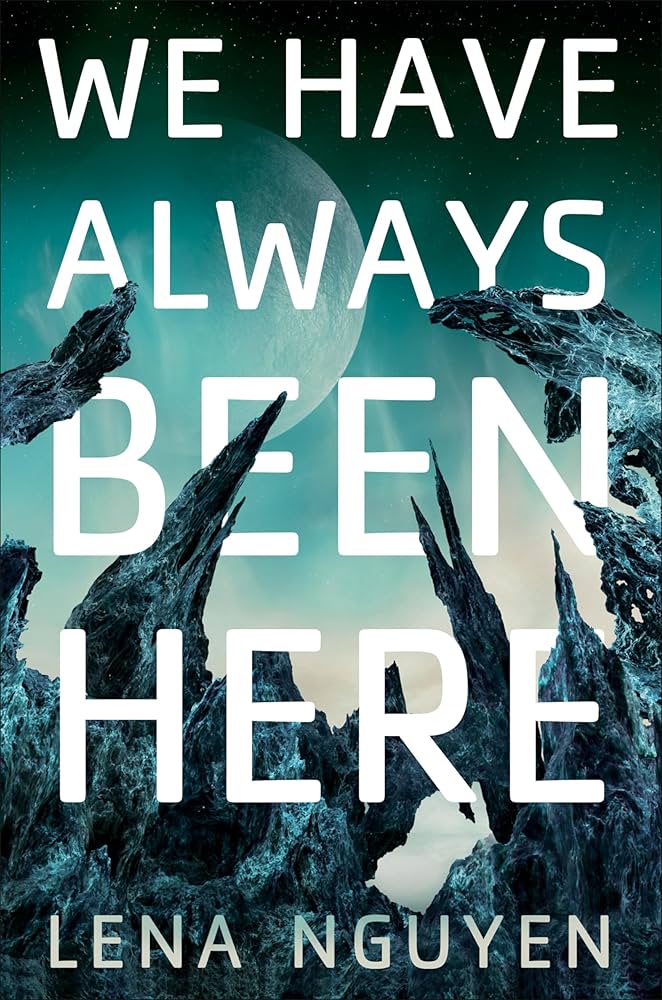
I’m a long-time devotee of science fiction and dystopia, and Lena Nguyen’s We Have Always Been Here has been on my radar since its release. I finally tackled it in 2022, drawn by whispers of a slow-burn psychological thriller in space and the tantalising promise of cultures colliding at the edge of the unknown. If “Kulturen kollidieren, als Außerirdische die Erde besuchen” is the classic SF pitch, Nguyen flips the lens: what happens when it’s humans who become the interlopers?
We Have Always Been Here by Lena Nguyen: Alien Culture Clash
Published on 6 July 2021, We Have Always Been Here is Nguyen’s moody, claustrophobic debut—one I picked up in 2022 and haven’t quite shaken off since. The premise hums with tension: a deep-space vessel, a silent colony, and a psychologist whose job is to keep both humans and machines functional under the strangest pressures imaginable. File it—tongue in cheek—under “Kulturen kollidieren, als Außerirdische die Erde besuchen,” though Nguyen elegantly reframes the encounter so that the real collision happens within the ship, between world-views and ways of being.
Our guide is Dr Park, a brilliant, guarded psychologist specialising in human–machine interaction, assigned to the Deucalion as it travels to the remote planet Eos. A colony has gone quiet, protocols chafe, and the corporate mission statement doesn’t soothe frayed nerves. As they draw closer to Eos, odd behaviours ripple through the crew and the ship’s android units alike—subtle shifts that feel less like malfunctions and more like evolving intentions. The nearer they get to alien soil, the less certain anyone is of where the true danger lies.
Nguyen’s culture clash is layered: human versus synthetic, rational inquiry versus superstition, individual ethics versus corporate calculus. There’s a steady, simmering friction between Park’s cool empiricism and the emotive, sometimes fearful reactions of those around her. The result is not an “aliens land in Piccadilly” spectacle but a quieter, more unnerving conflict of languages, loyalties and priorities. Earth doesn’t receive visitors here; rather, Earth is the visitor—finding the alien not only on Eos, but inside the fragile architectures of human and machine minds.
Favourite Quote & Verdict: 🍵🍵🍵🍵 Culture Clash SF
Favourite quote (paraphrased, to avoid spoilers): “Knowing how a mind works isn’t the same as knowing what it wants.” I loved how Nguyen keeps returning to this idea—understanding and empathy aren’t identical, and in close quarters the gap between them can become lethal. It’s a neat encapsulation of the book’s psychological tension, where communication is constant yet comprehension remains perilously incomplete.
My verdict: 🍵🍵🍵🍵. This is atmospheric, character-led science fiction with a deft psychological edge. The pacing is deliberate—more echo and heartbeat than gunfire—and the dread accrues in layers: corporate memos, quiet malfunctions, the way a corridor seems longer than it should. If you’re expecting bombastic alien-on-Earth theatrics, adjust your thrusters; the fireworks here are interior, and they blaze. When the reveals come, they feel earned, and the world-building lingers like static on the skin.
Recommended for readers who fancy Annihilation’s unease, Alien’s claustrophobia, and the ethical puzzles of Blindsight—minus the hard techno-jargon. Content-wise, expect anxiety, isolation, and some body-horror-adjacent imagery, all serving the story’s core: identity under pressure. It’s a thoughtful, uncanny voyage into how cultures—human, machine, and profoundly other—misread each other, and what’s lost in the gaps.
We Have Always Been Here took me somewhere colder and stranger than I expected, then made me sit with the discomfort until meaning surfaced. It’s not the slam-bang “aliens visit Earth” tale the shorthand suggests; it’s richer, pricklier—and wonderfully so. Four steaming cups from me, and a strong recommendation to anyone craving a cerebral culture clash amid the hush of deep space.