

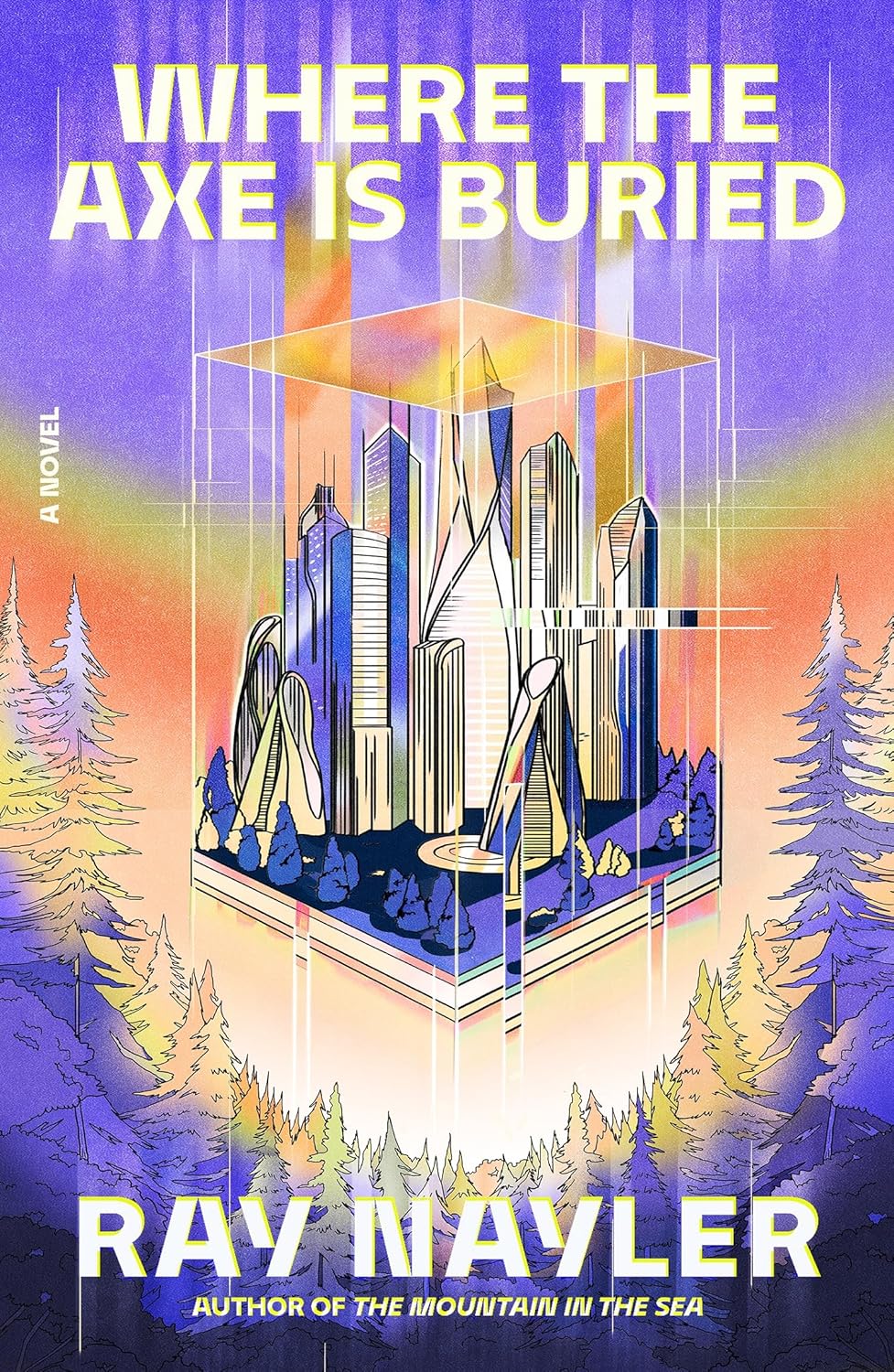
Ray Nayler’s Where the Axe Is Buried reads like a lament written on the ruins of tomorrow: intimate, intellectual, and quietly devastating. It’s the sort of dystopia that doesn’t shout catastrophe but lets you hear it in the wind, a mournful echo of choices we continue to make. As a lifelong lover of science fiction and dystopias, I found it both unnervingly timely and disarmingly tender.
Where the Axe Is Buried — Ray Nayler’s dystopian elegy
Nayler’s title is a sly reversal of the peaceable idiom “bury the hatchet”. Where the axe is buried implies not reconciliation, but memory—an exact location we keep in mind for the next return to violence. The story inhabits that uneasy space: after the sirens fade, after the slogans peel, after the algorithms are switched off or go on without us. The world here feels like a palimpsest of intentions, scratched over by necessity and loss.
What struck me first was the textural detail. Institutions exist like shells—recognisable, hollowed, repurposed by those who remain. People learn to speak around absence, to trade in fragments, to cultivate pockets of trust as carefully as they ration water or light. The science is never window dressing; it’s embedded in the lives of people trying to survive their own systems, to name what’s left, and to carry meaning across broken bridges of language and technology.
Stylistically, Nayler brings his signature clarity and hush. The prose is restrained yet lyrical, never indulgent, and the suspense flows from ethical dilemmas as much as from immediate danger. You get that lucid, observational gaze—anthropological but compassionate—that invites you to consider not only how a world ends, but how a conscience continues. It’s an elegy, yes, but also a ledger: of costs tallied, of debts we inherit.
From a sci‑fi lover: themes, quote, and 🍵🍵🍵🍵
The themes spiral around memory, complicity, and ecology. Where the axe is buried is not just a place; it’s a practice of keeping options open—of stowing away a readiness for harm while telling ourselves we’re done with it. The story worries at the edges of that self-deception. It also lingers over language—translation between people, between species or systems, between past intentions and present consequences—asking how we mean what we mean when the old frameworks are ash.
There’s a line I kept turning over in my notebook, paraphrased rather than quoted to avoid misremembering: Peace isn’t the burial of the weapon; it’s forgetting the map to it. That, to me, encapsulates Nayler’s humane severity: the sense that true change is less about declarations and more about unlearning the cartography of violence. The story never sermonises, but it does keep pointing—quietly, firmly—towards the habits we must abandon if we want a different outcome.
My rating: 🍵🍵🍵🍵 out of five. I reserve the last cup for the works that rearrange me utterly, but this comes close—measured, resonant, and impeccably crafted. If you admired the philosophical poise of The Mountain in the Sea, you’ll recognise the same moral curiosity here, distilled and sharpened. It’s a superb read for anyone who craves speculative fiction that thinks hard, feels deeply, and leaves a clean, haunting echo.
Where the Axe Is Buried is a quiet marvel—an aftershock rather than a blast, precise and lingering. If dystopia is often a mirror, Nayler offers a mirror with memory, reflecting not just who we are, but the coordinates we keep for harm. I closed the final page feeling chastened, oddly hopeful, and very much seen.